by Jeffrey Insko | Jul 3, 2014 |
The original letter sent to landowners by ET Rover contained a web link for more information. That link did not work. Up and running now, however, is a splashy new ET Rover web page. It’s not terribly helpful. The information it provides, including a map and a “citizens guide” is quite general and lacks detail (the Pipeline Safety Trust’s Landowner’s Guide is much more helpful, as is FERC’s citizen guide.)
But there are two interesting things to note about the ET Rover website:
First, in the list of open houses, the July 14 meeting in Fenton (according to the letter they sent) is not listed. We don’t know if this is an oversight or a change in plan. We’ll seek clarification; you should too.
Secondly, check out the “Open House Boards” at the bottom of the page. This gives some indication of how the open house will be run (or so it appears): as a series of manned stations. As we described in our post yesterday, thanks to some clever Wisconsin citizens, this is not the sort of forum that will be most advantageous to landowners. We urge our fellow landowner to ban together.
by Jeffrey Insko | Jul 1, 2014 |
Bits of information on the proposed ET Rover project have been trickling in, none of it verified with any absolute certainty. Here is what we have learned (or heard) since our last post:
- If you’re on Line 6B and you’re like us, it crossed your mind that this project might re-use the now-abandoned old Line 6B that is sitting idle in your back (or front yard). We never really thought that was very likely, but the fact that Enbridge has recently partnered with Energy Transfer to convert a gas line to crude made us a little nervous. So we wanted to Enbridge to go on record on this matter. Yesterday, Jason Manshum verified that “there are no plans to use the original Line 6B for this other project.” We’d have preferred that he put that a bit more directly, but it appears that we can (more or less) rule out the possibility of recommissioning the old Line 6B. That’s good news.
Unfortunately, Energy Transfer has not returned our two phone calls (no idea why), so the other information we have to share is coming from other landowners. Here’s what we’ve been told:
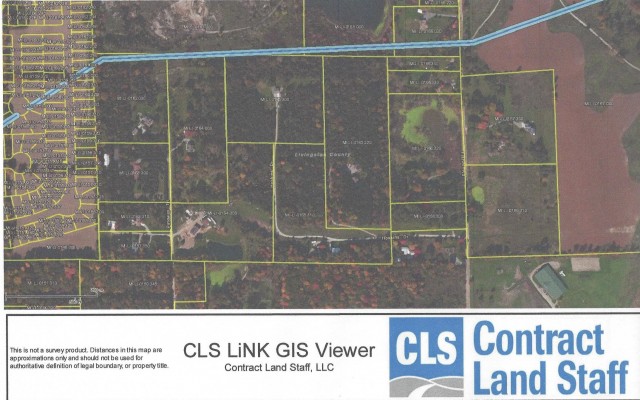
- The ET Rover route will NOT use the Line 6B corridor or easements, although it will loosely parallel the route, running north of Line 6B (how far north, we can’t say). Energy Transfer will be seeking NEW 60 foot easements from landowners and, presumably, municipalities. That’s not such good news. The image above shows a portion of the route running through a portion of Howell– and right through a subdivision! Line 6B is several hundred feet to the south of the blue ET Rover line in the image.
- According to the ET representative in one of our readers’ phone calls, the letter was sent to anyone in a 500 ft. radius of the line. If the proposed line runs through your property, it appears you would have received an additional letter and perhaps (even likely) a phone call asking for permission to survey your land. It is our understanding that many landowners are refusing that request. Please note that you DO NOT have to allow them to access your property to survey. You can just say no.
- This is the very beginning of a long process (please refer to the resources at the Pipeline Safety Trust website describing the FERC approval process). Energy Transfer has not yet fulfilled the requirements to file a permit application with FERC. The process can take a couple of years to run its course. That said, it’s best to inform yourself, make your wishes known, and organize with your neighbors and your local officials early.
- A reminder that the first of the ET Rover open houses is July 14 in Fenton. It is likely that company officials and/or land agents will conduct the open house informally, preferring to speak to landowners individually rather than collectively. This is NOT to your advantage. We strongly recommend that landowners gather together to make the open house a group affair. That way, everyone can hear everyone’s concerns and continuity of information will be assured. For reference, here is part of an account of how shrewd landowners in Wisconsin prevented Enbridge from controlling information in a similar fashion:
It was a combative format Enbridge was attempting to avoid when it originally organized the meeting to be an open-house format, with residents asking questions one-on-one with Enbridge representatives. However, some of the more than 75 attendees, including many political candidates who empathized with the crowd, were unhappy with the format and quickly began setting up chairs for a group presentation, succeeding in turning the session into two-hour group question-and-answer session. The group, closely monitored by two Jefferson police officers, then proceeded to drill the company representatives on everything from the company’s safety procedures to the pipeline welds, the content of the material flowing through the pipelines and their environmental record.
Lastly, if you are as concerned as we are not just about your own property and the treatment of your neighbors, but about pipeline safety in general, please take a moment to share (or even adapt) the open letter we wrote to Attorney General Schuette and DEQ Director Wyant regarding the newly proposed Michigan pipeline safety task force. The fact that the assembled task force does not include any landowners, property rights advocates, or conservationists is unconscionable. The only way to ensure that landowners do not continue to suffer at the hands of these energy expansion projects is to give them a prominent voice in the process. Regular citizens need to put pressure on their elected officials, at all levels, to make this happen. We’ll try to post more updates to our Facebook page as we receive them. Please stop by and give us a “like.”
by Jeffrey Insko | Jun 27, 2014 |
Now, here’s a coincidence: the very same week that Energy Transfer Partners announced a massive new pipeline construction project that will affect a large number of Michigan citizens– including, evidently, many Line 6B landowners– state officials announced the formation of a new pipeline safety task force.
You might think that’s good news– and at first glance, we thought so too. But then we saw who is on that task force, or rather, who is NOT on it. The task force is made up entirely of representative of the very agencies that have thus far failed to protect landowners, municipalities, and the environment. Frankly, it’s outrageous.
For that reason, just this morning, we sent the letter below to Attorney General Schuette and Michigan DEQ Director Dan Wyant. Please feel free to share.
—
Dear Mr. Wyant and Attorney General Schuette,
This week, the Texas-based pipeline company Energy Transfer announced plans to build a new network of pipelines to transport natural gas from the Marcellus and Utica shale formations in West Virginia and Pennsylvania across the country. Nearly two hundred miles of that pipeline network would traverse Michigan, much of it crossing through the property of Michigan citizens already reeling from the recent replacement of the Enbridge Line 6B pipeline. During the latter project (which is still not complete), landowners have been mistreated, lied to, misinformed and have watched helplessly while Enbridge uprooted their lives, destroyed their property, and abused its easement rights. Many local officials had similar experiences, as Enbridge evaded local ordinances and treated townships and municipalities with disregard (at best) or disrespect (at worst). To my knowledge, neither the Attorney General’s office nor other state officials or agencies have taken even the slightest interest in this series of events .
I mention these facts as important background and context for your announcement, also this week, of a new pipeline safety task force. Although it is a very late-arriving development, I welcome this news, especially considering the many oil and gas expansion projects planned or already in progress across the state.
Having said that, it is more than a little distressing to learn that the task force that has been assembled includes not a single landowner advocate, local official, or other member of the general public (much less a representative from an environmental or conservation group)– all people who have a profound stake in protecting public health and the environment. Landowners and local officials, in particular, are on the front lines of these pipeline projects. They are the people who assume virtually ALL of the risks of these expansions (yet earn none of the rewards). They are also the people most familiar with the conditions on the ground– private property and natural resources– where many of these pipelines will be placed. In addition, they are the same citizens, as you well know, whose interests your positions exist to protect. They deserve a seat at the table and a strong voice in these matters.
I realize that pipeline operators’ dealings with landowners and local governments may not be central to the task force’s mission. However, recent experience has shown clearly that the way pipeline companies treat these stakeholders reflects the way they operate their pipelines, which affects the safety of those pipelines. Given the terrible incident in 2010 in Marshall, I’m sure you can appreciate the many and varied concerns Michigan citizens have about further oil and gas development in our state. Those concerns include a widespread perception that state officials and regulatory agencies are working more on behalf of corporate interests than on behalf of ordinary citizens. Routing and permitting decisions, for instance, already in effect exclude the very people who are most directly affected by those decisions. Excluding these citizens from this task force will only further alienate them and do little to change perceptions that state agencies fail to understand the affects their decisions have on the daily lives of regular people.
It is worth noting that a great many Michigan citizens have been working toward the goals the task force has set for itself for quite a long time. In fact, there are currently three Michigan residents (including myself) on the Board of Trustees of the national Pipeline Safety Trust. In addition, the recent “replacement” of Enbridge’s Line 6B has created a large group of citizens with first-hand experience of pipeline planning, permitting, and construction. Their experience is an invaluable resource. In short, you should have no trouble finding any number of committed, knowledgeable, thoughtful, and collaborative-minded members of the public to participate on your task force. I implore you to seek them out.
Sincerely,
Jeffrey Insko
by Jeffrey Insko | Jun 26, 2014 |
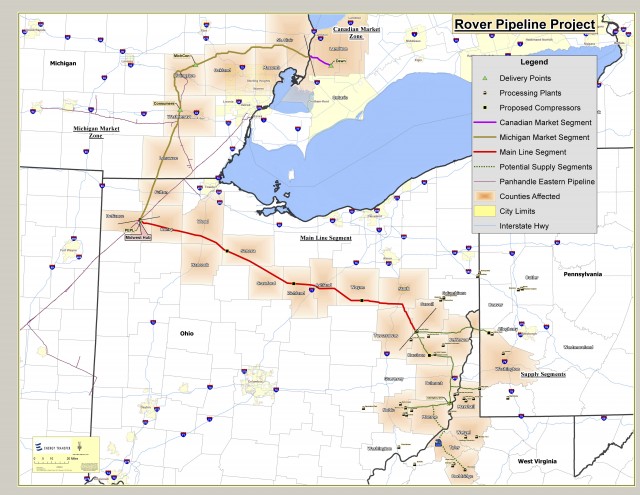
Thanks to the extraordinary staff at the Pipeline Safety Trust, we have a little more information about the proposed route for the ET Rover natural gas pipeline. That map (reproduced below)– it’s not very detailed– and some additional resources for landowners are available at the PS Trust website.
We’ll also link to that information and more on our Facebook page. If you are interested in this project or concerned about whether and how it will affect you (and you’re a social media user), please stop by and “like” us. We can post speedier updates on all of this there.

by Jeffrey Insko | Jun 26, 2014 |
Yesterday, we broke the news of a new natural gas pipeline project that will potentially affect Line 6B landowners (how many? we don’t know). The project will transport natural gas tracked from the Marcellus and Utica shale formations in West Virginia and Ohio to points around the country and Canada.
At present, very little detailed information is available, although we’re hearing from lots of landowners. We’re working hard to find out as much as we can as fast as we can. We do have a little more information in the form of a news article from the Wall Street Journal’s MarketWatch. Apparently, Energy Transfer has made the official announcement of the project. Here is the part that will directly affect Michiganders:
Additionally, ETP expects to construct an approximately 195-mile segment from the Defiance area through Michigan and ultimately to the Union Gas Dawn Hub (Dawn) near Sarnia, Canada providing producers with access to diverse markets and end-users in Michigan and Canada with access to Marcellus and Utica supplies.
We can’t say for sure, but given the fact that Line 6B landowners in Howell and Fenton have been contacted and the line will run to Sarnia, it sounds to us like they want to use the Line 6B corridor. However, we’ve yet to verify that. If we can find that out soon, you can bet we’ll let you know.
The other bit of information we have (from the letter sent to landowners) is that three open houses will be held in Michigan. The are as follows:
Monday, July 14 at the Fenton Township Hall in Fenton, 5:30-7:30 pm
Tuesday, July 15 at the Village Conference Center of the Comfort Inn in Chelsea, 5:30-7:30 pm
Tuesday, July 15 at the Lois Wagner Memorial Library in Richmond, 5:30-7:30 pm
A brief footnote about obtaining further details about all of this: we’ve called the contact numbers that Energy Transfer has listed for more information. Conveniently, the individuals listed are “not in the office” today. Imagine that.

by Jeffrey Insko | Jun 25, 2014 |
We’ve just gotten some terrible news. Some already battered Line 6B landowners have received letters this week from a company called ET Rover Pipeline (a division of Energy Transfer) announcing a natural gas pipeline project that, if the company has its way, will traverse some Line 6B properties– snuggled up cozily, evidently, right alongside the shiny new Line 6B (and, in some cases, other pipelines already in place).
It’s a deeply disturbing letter, not least because of its triumphant tone, which describes the project as if it is already a done deal– even though it’s at the very beginning of the process. One can only assume this is a deliberate strategy to make landowners feel helpless; it has almost certainly further demoralized them.
And make no mistake about it, this pipeline project is the result of one thing: fracking. Here’s how the letter describes it:
Please join ET Rover Pipeline LLC (ET Rover) for an informational Open House regarding the construction and operation of the Rover Pipeline Project. The Rover Pipeline Project will be a new interstate natural gas pipeline that receives gas from the Marcellus and Utica shale gas formations in Pennsylvania, West Virginia, and Ohio and traverses through Ohio and Michigan, and terminates at the Union Gas Dawn Hub in Ontario, Canada (Rover Pipeline).
The Rover Pipeline will consist of approximately 200 miles of pipeline laterals from the tailgate of natural gas processing plants and approximately 365 miles of mainline pipe in Ohio and Michigan, and 15 miles of mainline pipe across the border to the Union Gas Dawn Hub in Ontario, Canada. ET Rover will also need to build compression and metering stations along its route. Because of significant increases in the domestic natural gas supply due to shale gas production, the U.S. is no longer dependent on foreign sources. The construction of the Rover Pipeline will provide new natural gas pipeline infrastructure for your area.
Natural gas pipelines are regulated by the Federal Energy Regulatory Commission (FERC), which requires companies to hold these open houses prior to filing their applications for a Certificate of Public Convenience and Necessity. So despite the letter’s attempt to pretend that this project is inevitable, it’s really only at the very beginning of the process. What that means, however, is that it’s time to speak up and speak out before already abused and demoralized Michigan landowners have to endure a replay of the Enbridge nightmare from which, if they’re lucky, they have only just now awoken.
At this point, information is quite scarce. But we’re working on it. Rest assured we will keep you informed as more details become available. We’re preparing for action.
by Jeffrey Insko | Jun 10, 2014 |
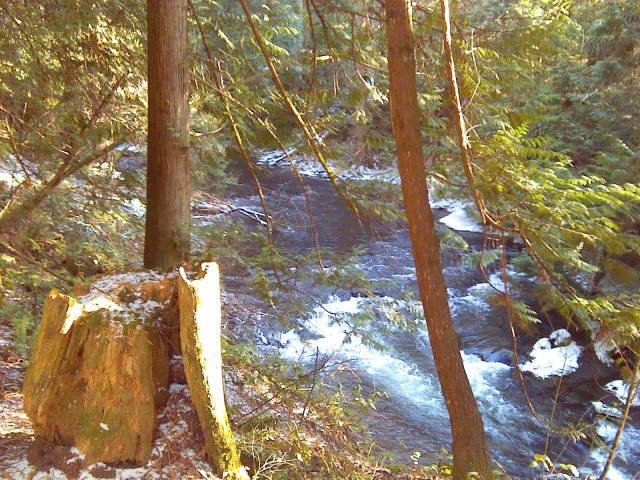
Whatcom Creek, Bellingham, Washington
Today marks a terrible anniversary. 15 years ago on this day, the negligence of a pipeline operator caused the deaths of three young people, changing their families’ lives forever. In the wake of that tragedy, the Pipeline Safety Trust was created to help prevent other families from having to endure the same horrible loss. The staff at the Trust works tirelessly and thanklessly to advance that cause. We’re humbled and proud to be associated with such a remarkable, committed group of people.
Fittingly, the Trust’s Executive Director Carl Weimer reflects on that awful event today in today’s inaugural post for the Trust’s brand new blog, “Smart Pig.” Please read it and share it with your friends. Everyone should know the story of Bellingham.
Read it here.
by Jeffrey Insko | May 7, 2014 |
We’re running a contest! Everyone is eligible. For details, please read on:
For a while now, we’ve been meaning to tell you that Enbridge has started its very own blog! Trust us when we tell you that it is every bit as good as you might imagine. In fact– no offense to all the marvelous sites we visit regularly— it’s pretty quickly becoming our favorite blog ever. It’s so good, in fact, that if we had the time, we’d write about it almost every day. Why? Well, many reasons. For example, there’s the incomprehensible corporate claptrap:
“This means we have a unique opportunity to collaborate with the various components of our value chain,” she adds, “on the role that CSR practices and market-based innovation can play in reducing carbon emissions and improving other aspects of environmental performance.”
There’s the fact that it appears to be written for an audience comprised of junior high school kids:
Energy is as essential to sustaining life today as water. Energy cooks our food, grows our crops, and provides the sustenance we need to lead active lives.
There’s the lineup of authors, which is supposed to make us believe that these Enbridge executives are typing up these blog entries themselves, as opposed to the Enbridge marketing team, which must mean that all Enbridge executives are taught to write in the same bland voice, full of corporatized, hollow slogans:
Our strength is in our people.
As North Americans, we owe our economic and social progress to fossil fuels.
We believe we need to be part of the solution to issues like climate change and we’re working hard to make a difference.
Working together, we will achieve our target of top industry performance.
There’s even the shameless attempt to exploit adorable dogs to persuade people to their point of view (seriously, who would do that?).
But by far, the best post yet comes from (is attributed to?) Leon Zupan, Enbridge’s Chief Operating Officer, Liquids Pipelines, who recently tried his hand at an extended metaphor. According to Zupan, pipelines are a lot like people and many of Enbridge’s employees are a lot like doctors. It goes like this:
First off, let me say that I am conflicted, as most of our pipelines, other than the original four lines, are older than me. I know that the regimen we follow to keep our lines in top shape definitely exceeds my personal regimen of exercise and diet.
Pipelines have some similarities to us:
- They have to have a health check;
- They may need some preventive work and the occasional professional treatment, and;
- If properly looked after, they can last a very long time, maybe an active working life longer than many of us.
We have some of the best pipeline “physicians” in the world working for Enbridge, and coupled with a team of external consultants and repair specialists, we do an industry-leading job of ensuring all of our lines are healthy and fit for purpose.
It goes on in this vein for a few more paragraphs before concluding on a sort of wistfully humanizing note, as Zupan says that he should “aspire to be as fit as the pipelines I look after.”
Now, it just so happens that we love a belabored metaphor. And we love it even more when the metaphor is terribly ill-conceived, as this one is. In fact, it got us thinking about some of the other ways that pipelines are just like people. So much so, that we thought it might be fun to make it a contest. So what do you think? How are pipelines like people?
We asked the crack Line 6B blog staff and they came up with these:
- Sometimes pipelines are mistreated and neglected by the people who say they’re taking care of them.
- Pipelines, like people, often do not fit the perfect ‘mold’ – they are not able to be inspected by the latest ILI devices, having a few too many curves or dips or divets.
- Pipelines are like people: stuff’s supposed to go in one end and out the other end. It’s bad if it comes out in the middle.
- Or, if Enbridge wants to be serious about the health care metaphor, consider this: the U.S. still does not have universal health care for all of its citizens. 14 percent of Americans remain uninsured. But that’s still a better situation than for hazardous liquid pipelines, where only about 42% of them are subject to rules that require periodic “health check” inspections. As for other 58% of them, operators aren’t required to take them in for check ups or “occasional professional treatments” ever. EVER. Until they fail, and then they have to fix them – much like the uninsured going to the ER. One would think that both ought to get some preventive care, no?
So there’s your challenge: how are pipelines like people? pipeline operators like doctors? (surely someone can cook up a good malpractice joke!). We’ll conduct the contest over at the Line 6B blog Facebook page. The winner, determined by the number of “likes” will receive bragging rights and admiration!
Submit your entry over on our Facebook page.
by Jeffrey Insko | Mar 28, 2014 |
Greetings! We’re sorry we’ve been neglectful around here the past few weeks. It’s been an eventful end-of-winter to say the least– we won’t bore you with any details. We do have a fair amount of new to update you on and we suspect that Enbridge is thinking about dusting off the bulldozers and getting back to work. For those of you at the beginning of the process: brace yourselves.
But for now, just a quick post with two items: you may have heard about the oil spill at the BP refinery in Whiting, Indiana, where some sort of “malfunction” caused a not insignificant amount of oil to spill into Lake Michigan. The exact number of gallons isn’t certain yet– but it’s rising. Nor is it clear whether the spill was dilbit (though the Whiting refinery is served by our very own Line 6B). You can read more on the story here and here and here.
While this incident is obviously troublesome, it’s also just in time for a forum that we’ll be participating in next week at Notre Dame University’s Reilly Center for Science, Technology, and Values. We’ll be giving a presentation, as will our friends Beth Wallace, Steve Hamilton of Michigan State, and fellow landowner and Notre Dame professor Patricia Maurice. We’re especially grateful to Patricia for setting this event up. If you’re in the area, we hope you’ll try to make it. We’d love to meet some of our readers in person. The event is Tuesday, April 1. Full details are available here.
by Jeffrey Insko | Mar 6, 2014 |
As we mentioned earlier today, Enbridge just announced an enormous new project: the “replacement” of over 1,000 miles of new pipeline all the way from Alberta, Canada to Superior, Wisconsin in the U.S. The project is yet another part of Enbridge’s strategy to out-Keystone Keystone XL, mainly by finding ways to transport tar sands oil across North America while also doing whatever they can to skirt regulatory processes. That’s what they did with Line 6B; it’s what they’re doing with Flanagan South; and it’s what they thought they could do with the Alberta Clipper.
Evidently, Enbridge president Al Monaco thinks there’s no question about this one. Here’s what he said on Tuesday during the announcement:
“It does not require a [new] presidential permit,” Mr. Monaco said on Tuesday. “Of course, Line 3 already operates under an existing presidential permit, so what we’re doing here is restoring Line 3 to its original condition.”
That statement may be more wishful thinking than fact; certainly it was an attempt to reassure investors. But the case might not actually be so clear as Monaco would like– or so we hope. That remains to be seen. We’ve also got our doubts that the project is simply a matter of “restoring Line 3 to its original condition.” That’s surely just a classic bit of Enbridge flimflammery: installing a brand new pipe is not, by any stretch of language or logic, restoration. It’s new infrastructure, which will most likely operate at much higher pressures and transport far greater volumes of product– presumably, mostly diluted bitumen– than the existing Line 3. If the current presidential permit is adequate for such a change in operations, there are even bigger problems with the permitting process than we thought.
In addition to those matters– about which there’s a great deal more to be said– what we’ve been thinking about since the announcement are all of the landowners along the Line 3 route. They’ll need to brace themselves. If recent Michigan history is any guide, they are in for a very unpleasant experience.
One bit of good news for all of those who will be affected by the Line 3 project, however, is that another group of landowners has recently lived through– is STILL living through– an Enbridge replacement project. And not only that, those landowners have spent a good amount of time documenting in as much comprehensive detail as possible exactly how Enbridge conducts itself on these projects: the way it (mis)treats and (mis)informs landowners, the way it (mis)communicates with the public, the way it (dis)regards local authority, the way it tries to evade state and local regulations, and more.
All of it–the whole Enbridge “replacement project” playbook– is documented right here on the Line 6B Citizens’ Blog. For that reason (forgive us for saying so), we don’t think the Line 6B blog has ever been more relevant.
We hope, we think, that Line 3 landowners can learn from our experience. Had we and our fellow landowners known going in all that we know now, we would have been much better prepared in every way for the long, painful nightmare that the “replacement” of Line 6B has been. For that reason, we want to do everything we can to reach out to Line 3 landowners, communities, and public officials in both Canada and the U.S. with the hope that they’ll spend some time here, using our experiences as a resource to protect themselves.
If you can– that is, if you know any landowners or groups in Canada or the Great Lakes region likely to be affected by this project– please let them know about us.
