by Jeffrey Insko | Mar 28, 2013 |
Yesterday, we took part in a telephone press conference (a “tele presser”) to announce a petition to PHMSA and the EPA spearheaded by the National Wildlife Federation and supported by a coalition of citizens and citizen groups. The petition seeks greater scrutiny, oversight, and safety standards for tar sands oil pipelines. We are happy to support the petition– and grateful to our friend Beth Wallace for the invitation to join the presser and for her work on the petition. Here is the press release, with a link to the petition:
Coalition Petitions EPA, DOT to Protect Water, Wildlife & Communities from Tar Sands Spills
ANN ARBOR, MICH. (March 27, 2013) – A coalition of landowners, former and current government officials, environmental, renewable energy and sportsmen’s groups filed a petition today with the U.S. Department of Transportation’s Pipeline and Hazardous Materials Safety Administration (PHMSA) and the U.S. Environmental Protection Agency (EPA) asking the agencies to develop stronger safety standards for tar sands oil pipelines.
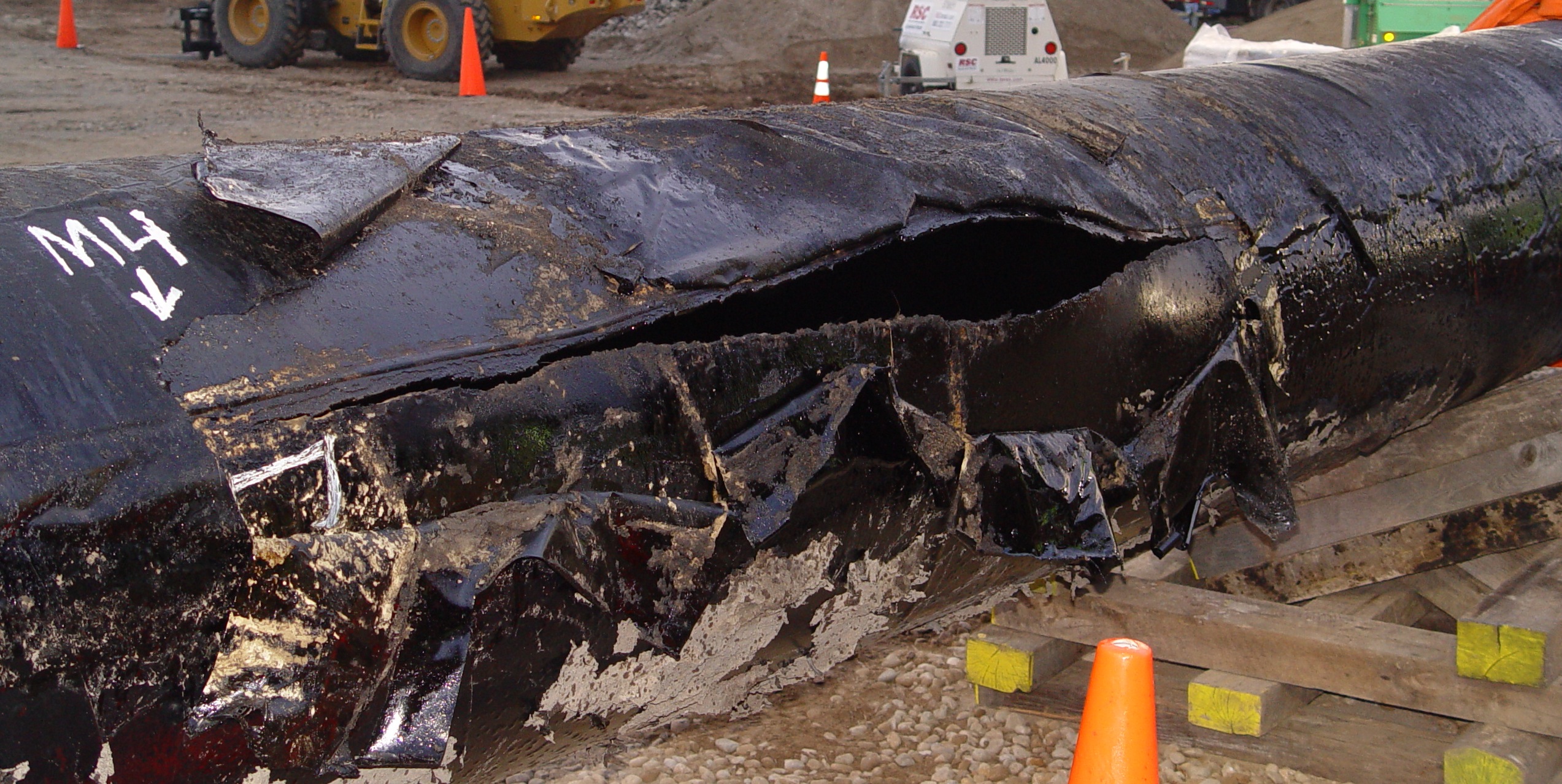
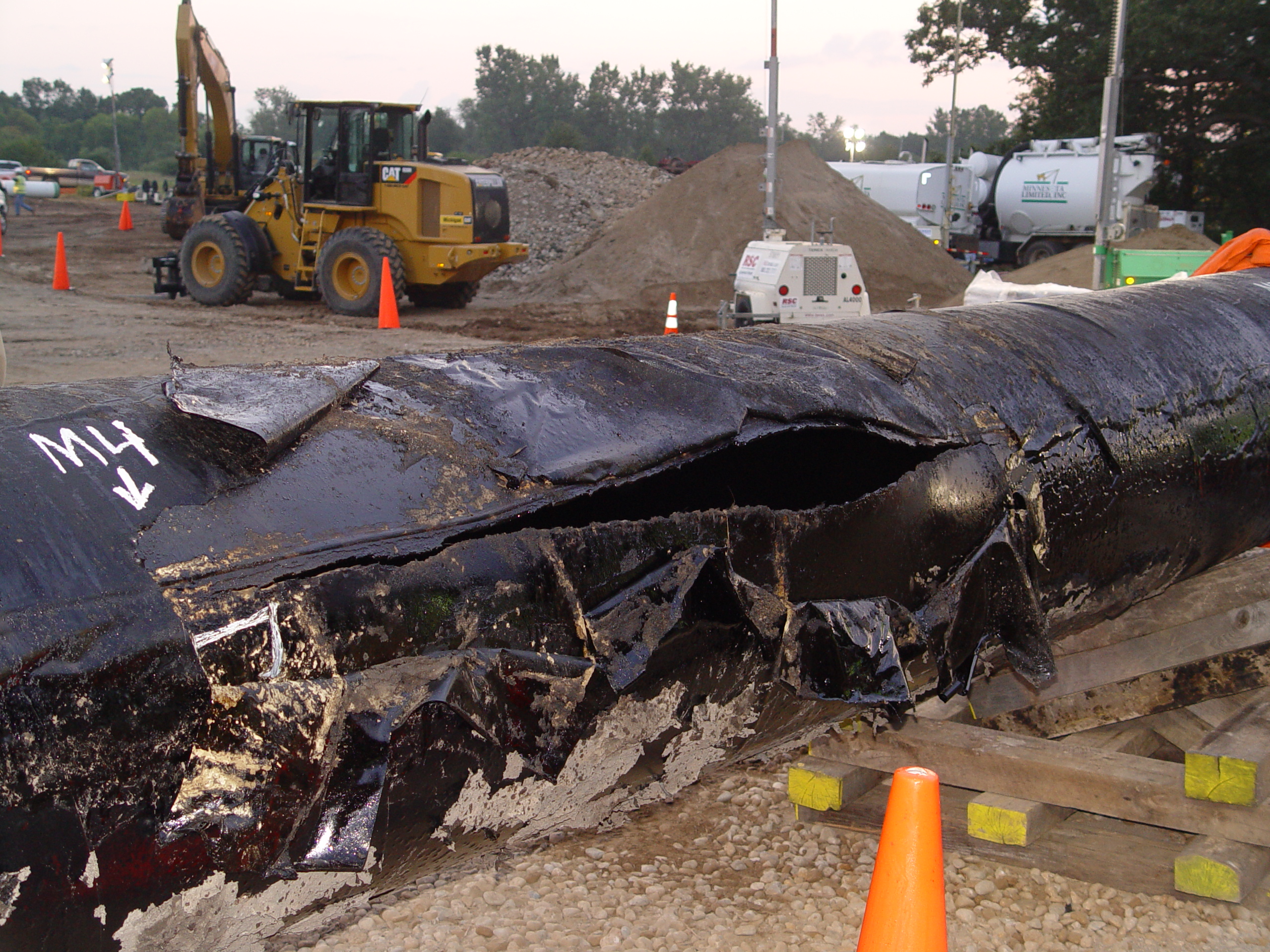
“Three years after the largest inland oil spill in U.S. history, little has been done to improve pipeline safety,” said Beth Wallace with the Great Lakes Regional Center. “This disaster should have been a wake-up call to industry, regulators and public officials. Instead industry is being allowed to expand pipelines across the region and even under the Great Lakes themselves, which will continue to put communities, wildlife and our economy at risk.”
Read the full petition here (pdf)
The petition effort is spearheaded by the National Wildlife Federation and includes 29 national, state and local organizations as well as 36 landowners from states across the country impacted by existing and proposed tar sands pipelines. It requests a halt to new or expanded tar sands pipelines until adequate rules are in place.
“This petition is an exercise of citizens’ rights to request that government live up to its charge to follow the law, and protect us from the harms and risk of a tar sands pipeline spill,” said Jim Murphy, Senior Council at the National Wildlife Federation. “Until the right standards are put into place, we shouldn’t be exposing more communities and resources to tar sands risks. We expect the government to answer our request and live up to its charge to properly address the unique risks of tar sands transportation.”
Current pipeline regulations were issued long before tar sands oil production ramped up and do not cover the unique aspects of tar sands. Tar sands oil poses more acute risks than conventional fuels shipped through pipelines because the oil is a volatile mix of raw bitumen – an asphalt-like substance – diluted with gas condensates. Diluted bitumen is a toxic, viscous, corrosive substance with the consistency of gritty peanut butter that must be moved at much higher pressures and temperatures than conventional oil. Strong evidence indicates tar sands oil threatens pipeline integrity.
“Even after what happened in Marshall, pipeline companies have continued to run roughshod over the state of Michigan while regulatory agencies and elected officials have stood by idly and allowed it to happen,” said Jeff Inkso, writer of the Line 6B citizen blog and landowner impacted by the Enbridge expansion project.
Between 2007 and 2010, pipelines in North Dakota, Minnesota, Wisconsin, and Michigan — the main states with a history of tar sands oil pipelines — spilled almost three times more crude oil per mile of pipeline when compared to the U.S. national average. In a scathing report on the Kalamazoo River spill near Marshall, MI, the National Transportation Safety Board pointed blame at current regulations, calling them “weak” and “inadequate.”
“Minnesota has experienced 11 oil pipeline leaks since 2002 according to PHMSA,“ said Gary Botzek, executive director of the Minnesota Conservation Federation, “We need to do a much better job of protecting our human populations and our wildlife populations that live next to these big pipelines.“
The petition requests new standards tightening several aspects of oil transport and pipeline safety:
- Stronger safety requirements than those for conventional crude oil;
- Industry disclosure of products carried through pipelines and their conveyance schedules;
- Stronger industry spill response plans;
- Shut-down requirements upon the first indication of a leak or other pipeline failure;
- Repair of pipelines as soon as defects are discovered;
- Transparent pipeline inspection reporting; and
- Pipeline inspection and monitoring by independent entities unaffiliated with pipeline or energy companies;
- A moratorium on building new or expanded tar sands pipelines until new regulations are final.
Supporters of the petition will be seeking cosigners over the next few months. Under the U.S. Constitution and the federal Administrative Procedure Act, citizens can file a formal petition requesting that a federal agency take specific actions required by law or change existing regulations. This petition requests a change in existing regulations. Federal agencies are required to respond.
National Wildlife Federation is America’s largest conservation organization, inspiring Americans to protect wildlife for our children’s future.
by Jeffrey Insko | Mar 18, 2013 |
Well, this one’s hard to resist: the debate up in Canada over Enbridge’s Northern Gateway project– basically, Canada’s version of Keystone XL– continues. And just last week, in testimony before the Canadian Joint Review Panel, an industry “consultant” named John Thompson offered some pretty novel testimony. You see, it turns out that oil spills have a way of kind of correcting themselves because they are actually economically beneficial.
Seriously. Citing the famous 1989 Exxon Valdez spill, Thompson goes on:
Although a spill could have a big impact on the fishery, Thompson said compensation and other opportunities – such as working on clean up crews – will ensure people don’t lose any income. He said the compensation packages would not just go to those catching the fish but also people working in processing industries.
“The net result of these whole compensation schemes is the idea that at the end of the day, nobody is any worse off than they were beforehand,” he said. “So what you would see is that the income levels would remain the same, the source of the income would differ. Instead of getting it directly from sales of product, it would be through the income compensation.”
I assume this sort of thing applies to Marshall, Michigan as well. Nobody there is “any worse off than they were before.” Right?
by Jeffrey Insko | Mar 11, 2013 |
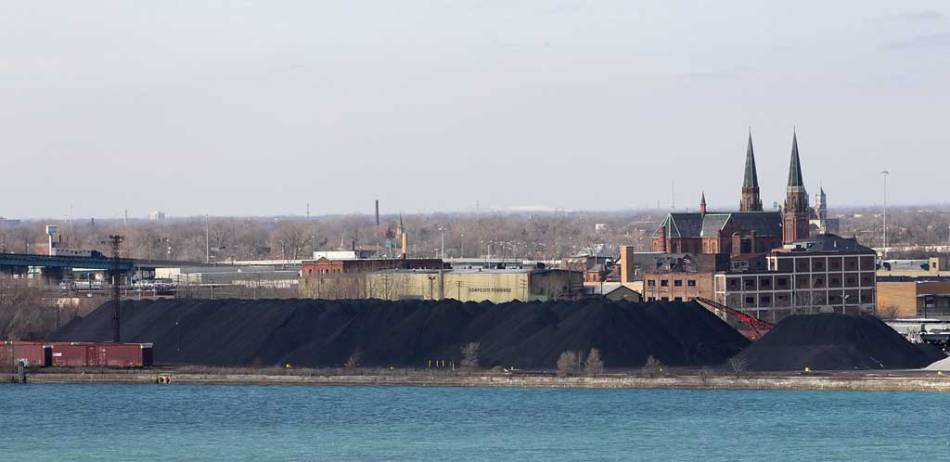
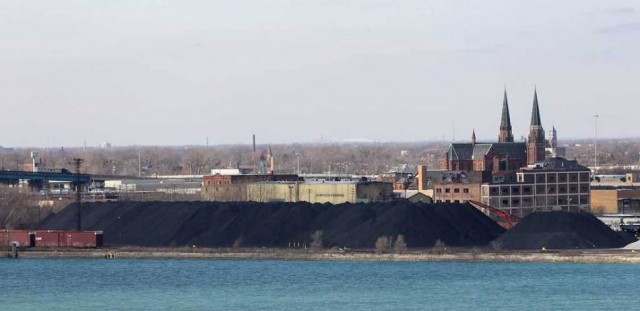
Photo by Dan Janisse, The Windsor Star
Here’s a distrubing story. You see, apparently pipeline spills are not the only way that the diluted bitumen Enbridge transports can foul Michigan rivers. Let us tell you about “petcoke.”
A byproduct of the refining process, petroleum coke is a fine powder that can be burned like coal and used in other processes, like making asphalt. The Marathon refinery in Detroit– you will recall that they recently completed a multi-million dollar expansion so that they could refine more of the dilbit Enbridge pipes to them– produces enormous piles of the stuff, which they then sell.
Where does it all go?
Well, a good amount of appears to be going, for the short term anyway, right down to the shores of the Detroit River. The Windsor Star over in Canada this week ran the disturbing story of mountains of petcoke sitting unprotected by the side of the river. From all appearances, it seems very unlikely that such a fine, powdery material would not blow or runoff or slide or otherwise leach its way into the river, along which it is piled. (The paper has since run some follow up stories. And here’s another on some protests over the piles.)
Apparently, the Michigan DEQ is now on the case. We wait anxiously to see what sort of action will be taken– but given the record of Michigan politicians and state regulations on these sorts of matters, we’re not all that confident.
Oh, and by the way, when entities like the state department do those calculations to determine the carbon emissions (and climate impact) of tar sands mining, as in their recent report on Keystone XL, the impact of burning petcoke– a far dirtier fuel than coal, evidently– does not get included.
by Jeffrey Insko | Mar 7, 2013 |
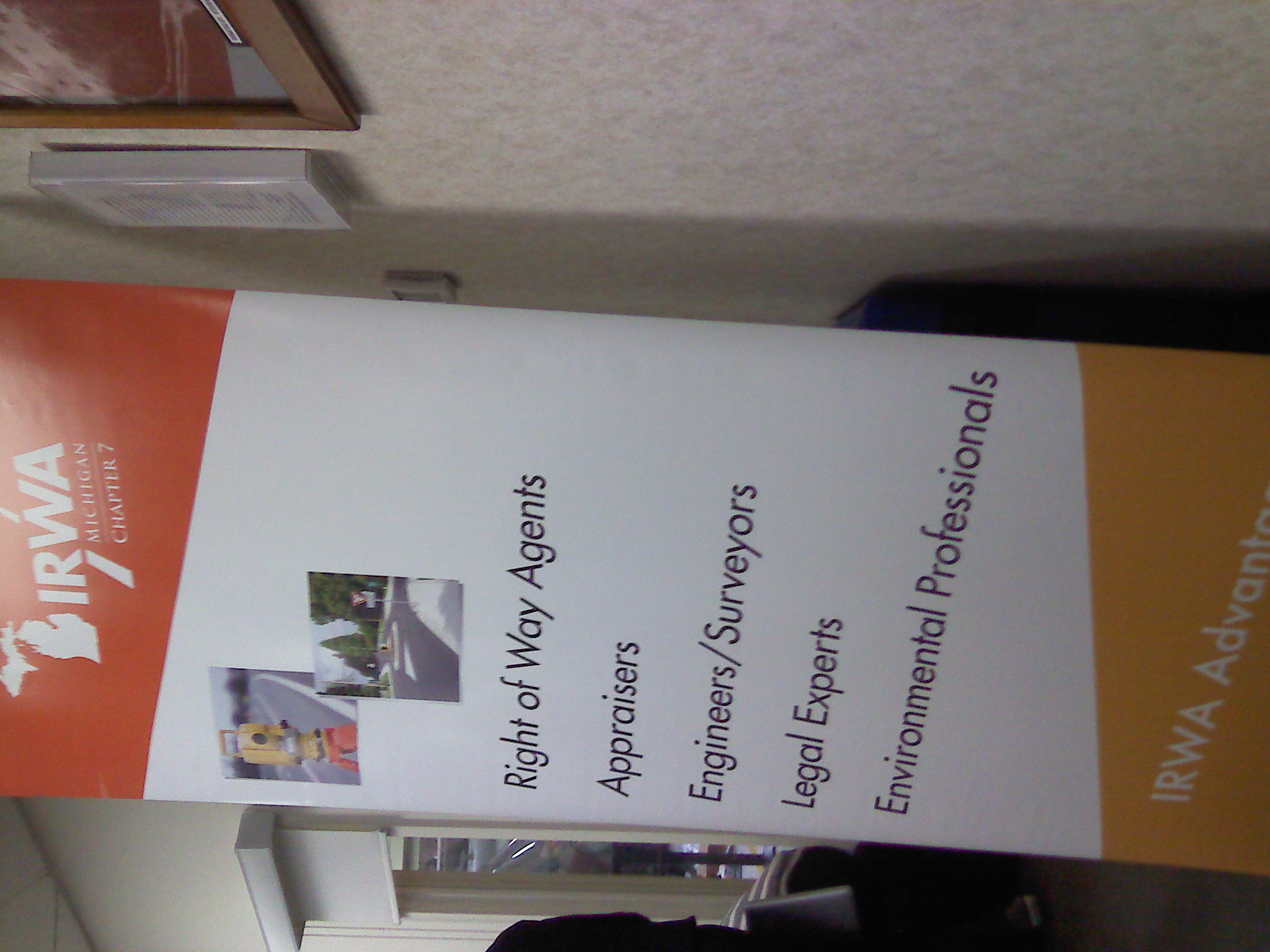
Here’s something we never ever would have imagined we would say: if you ever get a chance to go and speak to the Michigan chapter of the International Right of Way Association, take it. Those people are great.
More on our experience to come…
by Jeffrey Insko | Mar 6, 2013 |
A couple of weeks ago, we wrapped up our series on the woeful effort the Michigan Public Service Commission puts forth to protect the public interest. We noted the shallow analysis provided by their staff; the staff attorney’s vigorous efforts on behalf of Enbridge; the past work on behalf of industry performed by the Administrative Law Judge; the snide, hostile tone toward citizen intervenors taken by the Commission’s final ruling, and– perhaps worst of all– the way that the Commission (enabled by the ALJ) essentially allowed Enbridge, a foreign corporation, to re-write Michigan law.
It’s an appalling state of affairs, in our view. And while we realize the regulatory matters aren’t the sexiest topic in the world, we think this is a tremendously important story. It’s regrettable that it’s not the sort of story anyone in the media is likely to write about. Boring as it is, this is exactly how important matters (do not) get done.
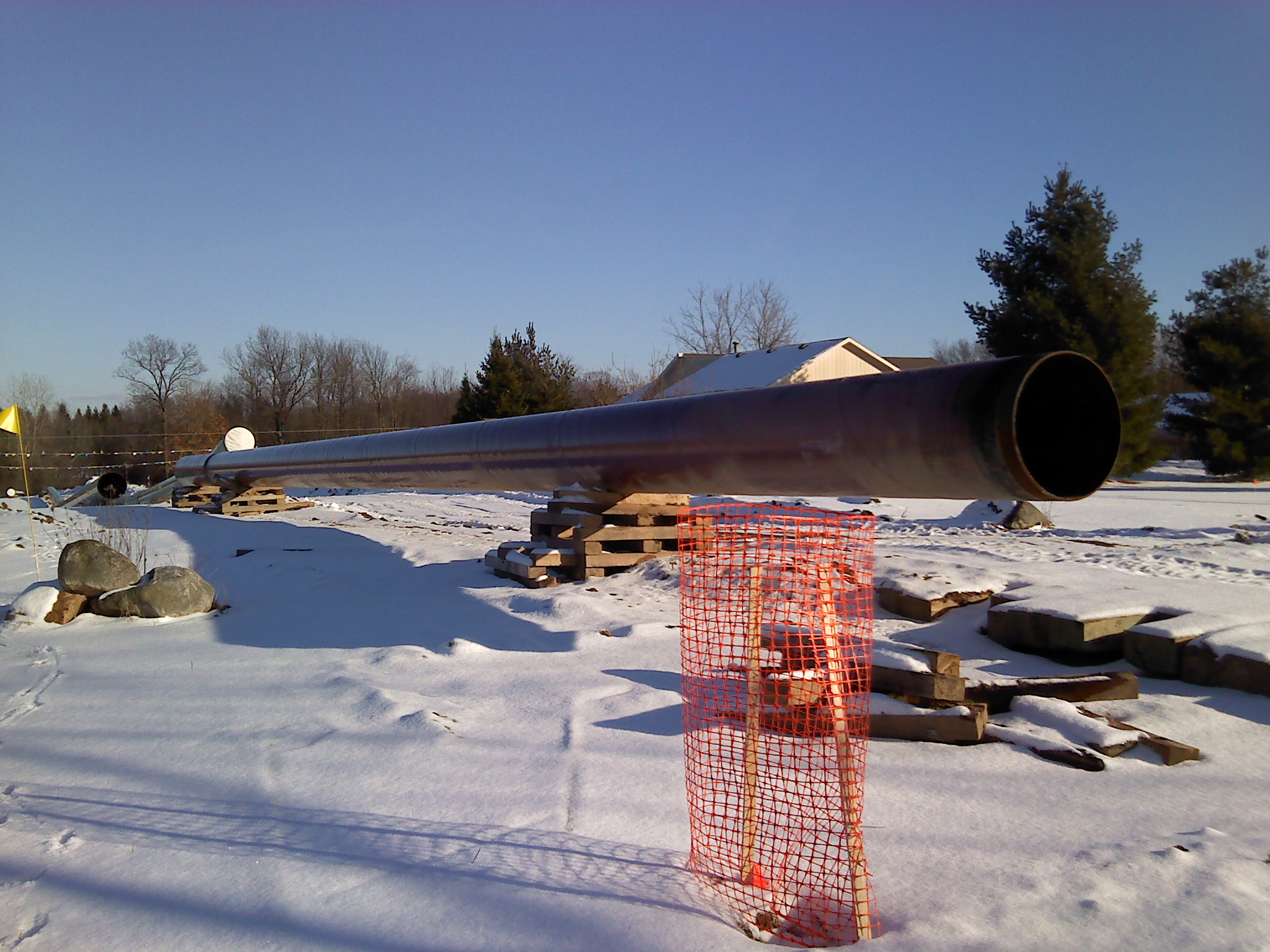
Which brings us to the latest out of the MPSC (which we learned about thanks to our friend Kim Savage). Turns out, it’s not just Enbridge that gets to disregard the public. The MPSC is happy to grant Consumer’s Energy the same privilege. You see, Consumer’s has applied to the MPSC for their own certificate of public necessity. They want to install some 25 miles of new natural gas pipeline over on the western part of the state.
Now, in compliance with MPSC procedures, Consumer’s is required to send out a Notice of Hearing to solicit filings for public appearances regarding their application– you may recall that this was something of a sticking point with Enbridge’s application. We wrote about it here and here. Anyway, here is the interesting– that is to say, disturbing part: Consumer’s Notice was not sent to even one single individual resident. That’s right, not one. And this despite the fact that as Consumer’s notes in their application, “The Project will cross approximately 4 acres of residential land. Based on a review of aerial photography 11 homesteads were identified as being within 200 feet of the proposed route.” That’s excluding farmland.
How is this possible? How is that Consumer’s can get away with not sending a Notice to those who are likely to be affected by this construction, whether directly or indirectly? Well, it turns out that the requirement for these Notices of Hearings is only that the applicant notify those who IT deems it has not obtained sufficient property rights. The fact that those 11 homesteads in close proximity to the project are going to be affected one way or another– wouldn’t you want to know about a major infrastructure project 200 feet away from your home?– evidently isn’t all that important to the MPSC, and certainly not to Consumer’s Energy. This is how the MPSC serves the public interest.
Note that we’re not talking about any onerous regulations on industry here. We’re talking about what ought to be the very bare minimum: making sure that the general public, and especially those landowners who will be impacted directly, are informed. Is that too much to ask?
by Jeffrey Insko | Feb 19, 2013 |
A few follow-up items to this morning’s ruminations on the hot Keystone XL debate:
- It probably won’t come as a surprise to anyone to learn that while Michigan legislators (with only one or two notable exceptions) have been sleepy and silent about the Line 6B replacement, they did find time to pass a resolution of support for KXL. The language of the resolution is almost identical to the language of resolutions passed by a handful of other states. Which is almost identical to the language of TransCanada’s PR machinery. Which is almost identical to the language of an industry friendly non-profit organization. A lot of which, we’ll add, is almost identical to things we’ve heard Enbridge reps say on more than one occasion.
- We were also pretty interested in this article debunking TransCanada’s rosy-sounding claims about all the great jobs the project will create– claims that might well be more than a little bit overstated. We’ve hypothesized as much about Enbridge’s similarly unverifiable (and therefore dubious) claims for a while now. By our unscientific estimation (counting pumping stations), the Line 6B project will yield maybe a couple dozen permanent jobs here in Michigan. Oh, and for the record, we did locate another Michigan worker recently. That brings our unofficial count all the way up to 4 Michigan residents out of about 31 workers with whom we’ve spoken.
- Lastly, we mentioned in our earlier post that there was a robust Michigan contingent at this weekend’s D.C. rally– and that just happens to be the topic of our friend Josh Mogerman’s NRDC Switchboard blog post today. Pop on over there and check it out.
by Jeffrey Insko | Feb 19, 2013 |
We try to stay focused and disciplined here at the Line 6B Citizens’ Blog. That is, while like most everybody else we’ve got lots of opinions about lots of things, we prefer not wander too much into areas that lie outside what we see as our primary mission here: helping landowners by keeping them informed about Line 6B matters, nudging and bugging public officials to pay more attention to the Line 6B project, and doing everything we can to try and get Enbridge to abide by their own professed values.
On the other hand, it’s not as though we aren’t keenly interested in related things: the implications of increased production and transportation of diluted bitumen, care for the environment and our natural resources, fracking, natural gas and pipeline safety across the country, property rights, U.S. energy policy, and so on.
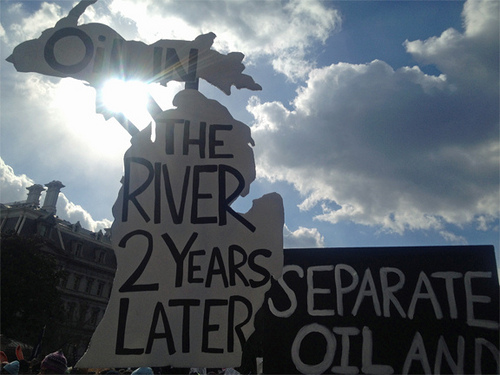
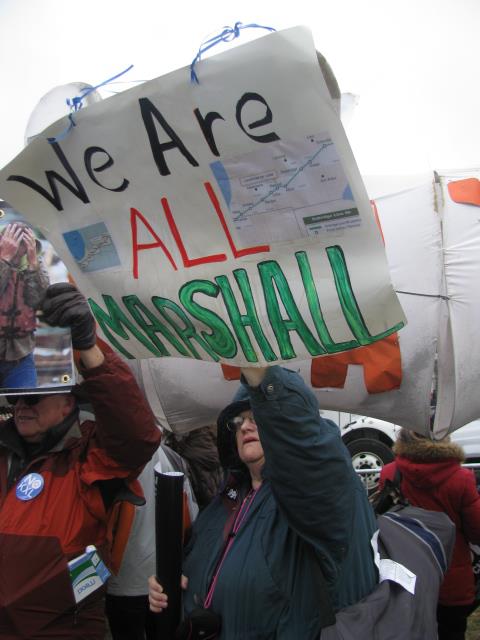
Case in point: the controversial Keystone XL project. Like many others, Keystone has been on our mind lately, especially over the weekend while reading and hearing about the remarkable “Forward on Climate” march on Washington D.C., which was attended by some of our friends and by plenty of good folks from Michigan. Honestly, we found the fervor and excitement of that rally– observing from afar– pretty thrilling. Elizabeth Shope’s account of the rally over at the NRDC Switchboard blog nicely captures some of that thrill.
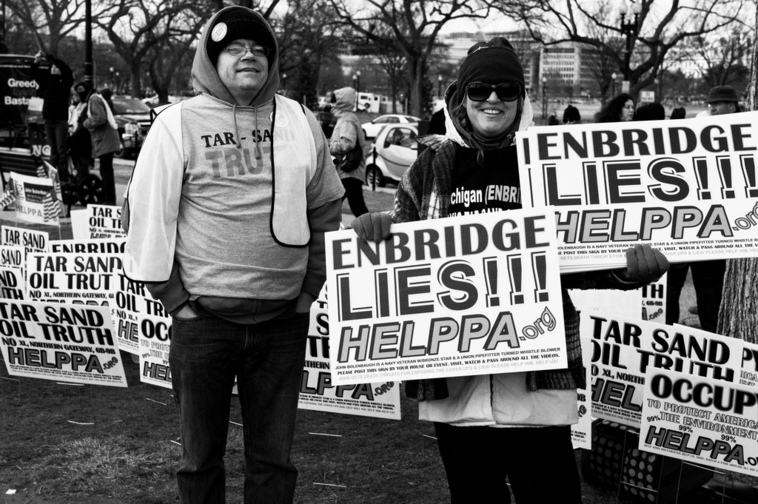
Perhaps our favorite moment came during the remarks of Chief Jacqueline Thomas of the Saik’uz First Nation in Canada who said that “Enbridge really has brought our communities together” and then, “Never in my life have I ever seen white and native work together until now [Cheers]. Thank you, Enbridge, for doing this work for me.” This captures something of our own experience: the way Enbridge also turned us into activists and brought us together with lots of wonderful people (you know who you are!) we otherwise never would have known.
Here’s the video of Chief Thomas:
Anyway, it’s not as if we haven’t been thinking about Keystone for a long time. Frankly, when it comes to Canadian oil pipeline matters, it’s hard not to. In fact, for us, the prominence of KXL has sometimes been an impediment to getting people to pay attention to Line 6B; just recall our now-infamous, painfully funny Debbie Stabenow story. At the same time, we’ve also tried to explain to everyone who will listen (not a very large population, we assure you) that anyone concerned about KXL should be equally concerned about Enbridge and Line 6B. It’s just that Enbridge has been lucky (and clever) enough to find ways to skirt the presidential permitting process.
Interestingly, the very same week as the Forward on Climate rally, came news that demonstrates yet another way that Enbridge (and Line 6B) and Keystone XL are related. Enbridge is partnering with a Texas firm to convert hundreds of miles of natural gas pipelines to carry heavy crude. The project– which just last year Michigan Governor Rick Snyder opposed–is part of Enbridge’s strategy to transport diluted bitumen down to the U.S. Gulf Coast and to New England. Line 6B, which Enbridge has always insisted has mainly to do with getting more product to the Marathon refinery in Detroit, is an important part of this strategy, as it connects to planned expansion lines headed to both the Gulf Coast and to eastern ports (see p. 11).
The reason for all of these conversions and expansions? Both Enbridge and TransCanada, the company behind KXL, are looking for ways to get the glut of Canadian tar sands oil to new markets and thereby increase its currently low price. And despite what know-nothings like Enbridge mascot Dr. Michael Milan will tell you, this Canadian oil end game, which will undoubtedly be great for Enbridge and TransCanada, is NOT likely to benefit consumers in Michigan in the form of, say, lower gas prices. Quite the contrary. And none of this, by the way– the conversions, expansions, and creative strategizing on the part of pipeline operators– helps lay to rest any lingering concerns we might have about the potential re-use of the exiting Line 6B.
As we said at the start, all of this lies a bit beyond our immediate purview; there are plenty of people who know a lot more about this stuff than we do. In fact, for some of this discussion we’re indebted to our friend Beth Wallace, who we learn from all the time, and to journalist Elana Schor, who is as smart and knowledgeable on these matters as anybody in the country. In fact, a recent excellent and provocative piece by Elana about Keystone is largely what got us thinking more about these matters. It should be required reading. Without dismissing legitimate concerns about climate change, Elana also suggests that framing opposition to Keystone XL only in those terms potentially “diverts public attention from a more immediate, less well-understood hazard: It’s not clear that federal regulators can ensure the pipeline will run safely if it is approved.” She points out further that,
killing the pipeline [KXL] will slow the march of oil-sands development for good. Resistance already has prompted oil companies to consider alternative shipment plans, from using railcars and barges to expanding Midwestern pipe networks owned by Enbridge, a TransCanada competitor. You may remember Enbridge from the costliest onshore oil spill in U.S. history, caused by a corroded Michigan pipe that leaked more than 800,000 gallons of Canadian oil in 2010. The National Transportation Safety Board found that 81 percent of that oil gushed after Enbridge employees misread alarms along their purportedly state-of-the-art system and twice tried to restart the pipeline.
Here’s where the safety risks surrounding KXL — the ones that play second fiddle to talk of oil-sands emissions — come into play. TransCanada’s first line of defense is the same technology that failed to stop the Enbridge spill, but even if it works perfectly, as much as 2 percent of the pipeline’s daily volume could escape from tiny leaks that are hard to detect. While that number sounds small, a 1-percent leak from KXL would gush as many as 8,300 barrels of oil per day and cause a spill three times the size of the Michigan disaster within a week.
We will continue to keep an eye on all of these matters and we’ll continue to try and remind people why Line 6B deserves as much attention and scrutiny as Keystone XL. We will also continue to appreciate, admire, and learn from all the good people– landowners, activists, thoughtful journalists– and organizations– like Bold Nebraska, the NRDC, and the National Wildlife Federation, and the Pipeline Safety Trust— working so hard to protect the public interest.
by Jeffrey Insko | Dec 12, 2012 |
Pipeline companies have a way of turning ordinary people into activists. Yesterday, we learned about one of these with the news that a Texas judge halted construction on the Keystone XL pipeline. An ordinary citizen, Michael Bishop, taught himself a bit of law and went to court, producing a very clever argument. It worked (at least temporarily).
Bishop’s argument, challenging whether tar sands oil (or “dilbit) is in fact “crude oil” as defined by Texas and federal law, put us in mind of a not-dissimilar argument some clever folks advanced here in Michigan a few months back. We wrote about it at length here.
And our friend Anthony Swift of the National Resources Defense Council has a new post about the Texas decision. It reminds us of Anthony’s coverage a few months back of how the IRS handles the question of whether dilbit is different from ordinary crude. Check it out.
Three cheers for Michael Bishop!