by Jeffrey Insko | Jan 2, 2014 |
While you’re all probably on pins and needles waiting to learn what made the #1 spot on our 2013 Year in Review Top Ten List, we’re prolonging the suspense to weigh in on another topic. You see, Enbridge has done its own review (though they’re a year behind) and just released its 2013 Corporate Social Responsibility Report. So that you don’t have to– and trust us, you don’t want to– we’ve taken a look through it.
Mostly, it’s a lot of foggy, unspecified claptrap and self-flattering puffery delivered in barely comprehensible corporate-marketing jargon, full of sentences like this: “Enbridge manages the impacts of our operations on communities through three areas of enterprise-wide activity that have complementary programs and practices.” That sort of thing goes on for 205 pages. Just how bad is it? Well, the word “impact” (or variants of it) occurs on 71 of those 205 pages, usually multiple times; on one page, for example, the word is used 12 times, which yields painful sentences like this: “These measures will be implemented within five years of the impact occurring.”
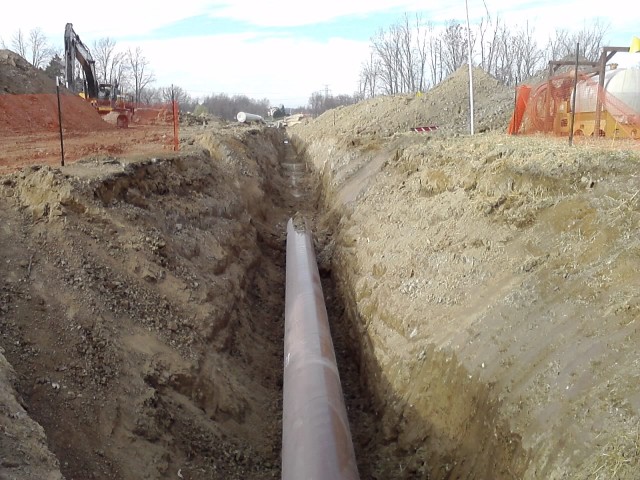
But if you can get past the atrocious corporatized prose, the most striking thing about the Report is the almost complete and total absence of any mention whatsoever of the Line 6B replacement project– an exceedingly bizarre omission considering the fact that it amounts to a nearly $3 billion capital investment for Enbridge. Of course, the Report does mention the Line 6B rupture in Marshall a handful of times, but beyond that, there isn’t a word about the fact that Enbridge spent most of 2012 constructing a brand new Line 6B through a significant stretch of Michigan. Obviously, this is a curious omission for a number of reasons. But let’s focus on just one:
Enbridge spends a lot of time in the report explaining how it conforms to the guidelines set forth by the Global Reporting Initiative, which is apparently a pretty big deal. We’re not quite sure why and a quick visit to the GRI website isn’t much help. Here’s how they describe their mission. We’ll award bonus points to anyone who can make heads or tails out of this:
The Global Reporting Initiative (GRI) is a leading organization in the sustainability field. GRI promotes the use of sustainability reporting as a way for organizations to become more sustainable and contribute to sustainable development.
Evidently, if you repeat the word “sustainable” enough times, magical things will happen; you may even be safely returned home to Kansas.
Anyway, according to Enbridge’s CSR Report, one of the “tests suggested by the GRI” to ensure completeness of information is that “The report does not omit relevant information that would influence or inform stakeholder assessments or decisions, or that would reflect significant economic, environmental and social impacts.” Again, the prose here is terribly and needlessly unclear, but the gist of it seems to be that if you leave out pertinent information in your report, people might not be able to trust what you are saying. Which is one of the reasons why it is so very strange that Enbridge would leave out information as relevant to their corporate conduct in 2012 as the major project they started in Michigan.
This omission is most disturbing when it comes to the section of the Report on “Community and Landowner Relations” (including a section titled– what else?– “Assessing Impacts”). There, Enbridge says that its philosophy “is to be as transparent as possible with our stakeholders. . . We accomplish this by undertaking timely, honest and open communication with them and with communities located near planned projects that may have an impact on them.” And how, exactly, does the report go about assessing the transparency, timeliness, honesty, and openness of its communications? Well, it doesn’t. It does provide a “Scorecard” that purports to provide “results” of these efforts. But there’s no score recorded on the scorecard; there’s no data and barely even one single example of how Enbridge has communicated honestly or openly with landowners.
Even worse is Enbridge’s discussion of the “public concerns” over three of its most high-profile projects: Northern Gateway, the Line 9 reversal, and the Marshall spill. That discussion is titled “Challenges and Our Responses” and it is Enbridge’s attempt to demonstrate how they deal with “contentious issues and projects.” Here is the entirety of what Enbridge has to say about the “contentious issues” associated with the Marshall spill and its aftermath (which presumably includes the replacement of Line 6B):
On June 24, 2013, an individual protesting oil pipelines and spills disrupted the rebuilding of Enbridge’s 6B pipeline south of Marshall, Michigan (close to where the pipeline ruptured in 2010), for several hours.
Yep, that’s it. According to Enbridge, the only “challenge” associated with the Marshall spill, the ongoing cleanup, and the replacement of the line is Chris Wahmoff’s now-infamous protest. Nothing about the challenges before the MPSC; nothing about the POLAR lawsuits; nothing about the dozens and dozens of condemnation cases and other legal disputes with landowners; nothing about the protracted battle with Brandon Township; nothing about the innumerable stories of land agent misbehavior, poor communication, line list violations, or general landowner dissatisfaction that we documented all throughout 2012 and 2013 (you’ll find discussions of all of that here in our archives). Enbridge simply pretends like none of this ever happened. Instead, once again refusing to take an honest look at its own conduct or its critics and still working from the Pat Daniel playbook, Enbridge would have readers of its Corporate Social Responsibility Report believe that concerns about its activities in Michigan can be boiled down to a single, isolated environmental radical climbing inside a pipe one day. Rest assured that they treat the reasonable, diverse concerns about their Canadian projects just as dismissively.
We keep thinking that this sort of delusional behavior is unsustainable, but nothing we say seems to have much impact.
by Jeffrey Insko | Dec 9, 2013 |
It’s the end of the semester for us, which is why we’ve been a little quiet this past week. There are all sort of final tasks to attend to this time of year, not least of which are piles of student papers to grade. Wish us luck that they are all brilliant and trenchant!
But there is a bit of pipeline news to share, including a personal item we’ll tell you about soon.
The latest Enbridge news, unfortunately, isn’t so good. Ace reporter Jennifer Bowman over at the Battle Creek Enquirer reported this week that Enbridge is suing the owner of a farm along the Line 6B route to gain access to his property for activities related to the spill cleanup. In its suit, Enbridge claims that the landowners have been recalcitrant and unwilling to reach an agreement. Knowing how Enbridge negotiates with and treats landowners, we’re more than a little skeptical about Enbridge’s claims in this matter, although the full details of the situation aren’t entirely clear. At the very least, dragging yet another landowner into court doesn’t seem like a very good p.r. move, given Enbridge’s already damaged reputation in this state.
 We’ve also gotten word that construction activity has begun to heat up on our friend David Gallagher’s property. And evidently, it’s off to a rocky start. Dave tells us that crews tried to begin work before installing some agreed-to seismic monitoring equipment. We fear that this is only the first of a long stretch of headaches Dave, like so many others have endured, is going to have to attend to in the weeks and months to come.
Another landowner, our friend Patricia, has also contacted us with some terrible, ongoing noise and mess over in her neighborhood– again, just one in a long litany of difficulties she’s had to put up with. That story will be the next installment of our ongoing series of landowner stories. Expect it very soon.
Lastly, we’re still working on the first of our series of posts about last month’s PS Trust conference. If you haven’t seen them already, the video presentations are available for viewing. If nothing else, we strongly recommend, where you can hear from the above-mentioned Dave Gallagher, along with two other remarkable pipeline-company-created activists.
by Jeffrey Insko | Nov 18, 2013 |
Here’s one we’ve been trying to steal some time to write about for a couple of months now: if you haven’t heard, Enbridge is planning to build a new 600 mile pipeline from North Dakota to Superior, Wisconsin– what they’re calling the “Sandpiper Project.” Not surprisingly, this proposed project has had some landowners worried and concerned, especially a smart and well-organized group of farmers and others in Minnesota calling themselves the Carlton County Land Stewards.
Thanks to their efforts, Enbridge announced last week that it would alter its originally proposed route through Minnesota to minimize disturbances to critical forests and farming operations. Enbridge’s announcement came on the heels of a unanimous vote by the Carlton County Board backing the revised route for the pipeline.
Now, this decision by Enbridge is certainly to be commended. As we’ve said almost from the day we launched this blog, responsiveness to the concerns of landowners and local authorities is absolutely critical for establishing and maintaining good relations between pipeline operators and the public; it’s good for property rights, good for the environment, and good for pipeline safety. The trouble, of course, is that down here in Michigan, Enbridge has too often NOT been responsive or receptive to the concerns of landowners and local citizens. That’s mainly what we’ve spent so much of our time documenting for well over a year now. And that’s why we are calling the news out of Minnesota “good” with a question mark to indicate our wariness, a wariness we’re pretty sure is shared by the Carlton County Land Stewards.
Here’s a bit of context:
A tour through our archives will provide you with plenty of examples of how Enbridge has repeatedly proven itself unresponsive: from failing to hold public informational meetings on this side of the state to declining to attend township meetings, or meeting with municipalities reluctantly, flouting local ordinances, dragging its feet on agreements and actions, failing to return emails and phone calls from landowners, and on and on. We have spent far too much of our time trying to wrap our heads around this pattern of behavior, trying to figure out why it seems to be so hard for Enbridge to act according to its stated values. And we’ve been told more than once by Enbridge representatives that our experience here in Michigan is not ordinary, that it’s an “anomaly,” that for various reasons not clearly explained, the Line 6B project has been unusual. (Of course, in saying this to us, those Enbridge representatives have not taken any real responsibility for the very serious problems they have caused here; they’re just trying, once again, to explain themselves.)
We’ve always found this pill– that matters in Michigan are unique and not the norm for Enbridge– rather hard to swallow. We’ve heard too many stories from elsewhere, like in Canada, that suggest otherwise. Consider, for instance, this profile of Enbridge executive Janet Holder published in a Canadian paper a couple of months back. The article focuses on Holder’s attempts to repair the companies strained relations with the people of British Columbia, whose support is desperately needed by the company in order to get its embattled Northern Gateway project approved. What’s most striking about the article, however, is just how familiar the story it tells is. Initially, Enbridge tried to have its way, to run roughshod through B.C. Only later, after pushback from First Nations and others, did Enbridge launch a PR-style campaign to try and repair the relations it damaged. This is likewise– minus much effort at repairing relations– the story of the Line 6B “replacement.”
Just how endemic to the company is this lack of consideration toward communities and landowners? The most extraordinary part of the article is when it quotes a former Enbridge executive:
LOUSY ENGAGEMENT
But even a former Enbridge executive said the company has done a lousy job of community engagement.
Roger Harris, a former Liberal MLA and Enbridge vice-president, said he quit the company in 2010 after it developed a “grid system” for deciding which public meetings to attend.
He said the grid assigned demerit points for meetings based on the size of the audience, the likelihood of negative questions and whether the media would be present.
Meetings that accumulated too many demerit points on the grid — indicating the company might get a rough ride in front of a large audience with reporters watching — were skipped, Harris said.
“They were afraid to attend meetings other than small, private gatherings of their supporters when they should have been embracing the outrage and trying to win over critics,” Harris said.
“They had to go into rooms of people who didn’t support them, but they refused and it just bred more suspicion.”
Janet Holder is dismissive of these remarks. But for anyone who has attempted to communicate with Enbridge, Harris’s account seems utterly plausible. It’s an explanation for the bizarre pattern of evasive engagement and poor communication we’ve encountered in numerous situations. In fact, what Harris says here is essentially what Enbridge V.P. Mark Sitek told us when he mentioned that Enbridge is reluctant to hold public meetings because it often feels “ambushed.”
So what does this have to do with Minnesota? Well, the very same week that the Holder profile appeared, one of the Carlton County Land Stewards, a farmer named Janaki Fisher-Merritt published an editorial in a local Minnesota paper. In the excellent piece, Fisher-Merritt carefully describes the reasonable concerns of Minnesota citizens about the Sandpiper project (read more on those concerns here and here). But perhaps the most striking things he says is this:
Unfortunately, there seems to be no avenue for public comment on the project at this stage. My neighbors and I have requested to meet with Enbridge to make our concerns clear. Unfortunately, the company’s officials will not meet with groups of landowners or discuss our concerns comprehensively. They instead seem to prefer to single us out and only discuss our small pieces of land, not the route as a whole.
Once again, we have the same story: a reluctance (if not outright refusal) by Enbridge to meet with communities and groups of landowners and a reliance instead on the deeply flawed and alienating land agent system.
The situation in Minnesota parallels our in Michigan in other ways as well. In another article just a few weeks ago, landowners express their frustration at Enbridge’s abuse of easement rights. It seems that Enbridge’s surveying crews were staking on properties without the property owners’ permissions. Evidently, just as they did in Michigan, Enbridge has been exerting eminent domain rights before being granted those rights by the Minnesota Public Utilities Commission. The article also documents some familiar instances of the kind of non-communication so many of us have experienced from Enbridge: evasions, non-explanations, failures to follow up.
Based on this evidence, it’s hard to accept the notion that things in Michigan have somehow been different, that some unique set of circumstances beyond Enbridge’s control have caused all the trouble here. Quite the contrary: it appears that we are simply experiencing some version of the shabby treatment the people of British Columbia experienced. And now the people of Minnesota (and elsewhere) are experiencing the same. This is why we are cautious and chary about how “good” the news is from Minnesota. It appears to be a positive first step. We are very glad Enbridge has taken it. But, as the Carlton County group understands, it’s only a first step. There is much more work to be done. We will continue to watch the story and support our Minnesota friends in whatever ways we can.
If you are in Minnesota and want to learn more or add your voice to the chorus of concerned citizens, there is a public forum planned for later this week. Details are available here.
by Jeffrey Insko | Oct 7, 2013 |
Happy Monday everyone. This week, among other things we’ll be discussing a couple of newspaper articles from phase two of the Line 6B project, one from Griffith, Indiana and the other from Niles, Michigan. What do the two articles have in common? Well, they both feature some of that good old fashioned Enbridge public relations film-flammery. Here’s part one:
Over the past year or so, we think we’ve established pretty clearly that the things Enbridge’s spokespersons say can rarely be trusted. Their utterances can generally be grouped into five categories:
- Statements that are true, BUT...
- Statements that are hollow and vacuous
- Statements that simply can’t be verified
- Statements that are terribly misleading
- And statements that are simply not true
We’re not sure if there’s some sort of training manual that teaches these people how to communicate this way, whether it just somehow comes naturally to them, or whether it’s the result of imbibing the Enbridge culture. But what we do know is that the obvious sixth category– just saying things that are honest, forthright, and transparent– is an area into which Enbridge spokespersons rarely stray; perhaps they occasionally get there accidentally.
At any rate, our latest specimen of Enbridge PR-speak comes from the Northwest Indiana Times. Apparently, Enbridge will be removing a dozen trees from a local park in Griffith, Indiana. That fact is uncontroversial, as the Town Council reached an agreement with Enbridge and received compensation months ago. The problematic part is when Enbridge spokesperson Jennifer Smith (you may recall her from months ago) says this:
Enbridge has a neutral footprint program, so for every tree the company removes, it will plant a new one, Smith said. However, trees will not be replanted into the easement due to the safety issues, Smith said.
What we have here is a Category Four statement (terribly misleading). Why? Well, just imagine that you are a casual reader of this Griffith news article. You would likely come away from reading it with the idea in your head that Enbridge will be replanting all the trees they cut down– including the dozen or so they’re cutting down at that town park. Then later, when you are driving home and you see the enormous swath of denuded land that Enbridge has cut through your county and beyond, you might understandably think, “Well, that’s quite a lot of tree removal they’re doing, but at least they’re going to replant them.” At some other time, you might notice somewhere around town that Enbridge is taking down large quantities of trees on someone’s property– at which point you might reasonably say to yourself, “Wow, that would suck to see all the trees in your yard getting cut down. But at least Enbridge is going to replant them.” And as a result of all of this, you might well find yourself saying to someone during casual conversation at dinner, “Man, Enbridge sure has cut down a lot of trees around these parts. But while that’s a little unfortunate, I learned from the newspaper that they will be replanting all the trees they cut down. And that’s pretty neat. They sure are a respectful and responsible company. Let’s raise a toast to Enbridge!”
And that’s just how Jennifer Smith and Enbridge like it.
Unfortunately, all of those thoughts you’d be having and that positive impression you’d have based on your (quite reasonable) understanding of Jennifer Smith’s statement would be very, very wrong. You see, while Enbridge might very well be planting a dozen trees in that park in Griffith to replace the ones they’re cutting down, they absolutely will NOT be replanting new trees for every tree they cut down all around town and on people’s property. Despite the rosy, generous, responsible impression conveyed by Jennifer Smith’s blithe statement, that is not at all how their “neutral footprint program” works.
You see, it’s not really true that Enbridge plants a new tree for every tree the company removes. It certainly isn’t true when it comes to trees on individual properties; believe us, we’ve asked. Moreover, to the extent that Enbridge DOES replant trees to offset those that they remove, they don’t necessarily replant them in the same place where they took them down. Rather, the slightly misleadingly named “Tree for a Tree” program is really just a way to try and offset, in some general way, the depletion of resources as a result of some project as a whole. We are quite confident that nobody has been out counting the number of trees Enbridge has cut down along Line 6B and equally confident that nobody is then making sure the same number get planted as a result. Our best guess is that there is some general formula for this neutral footprint: X number of acres of forest were affected (which probably doesn’t include individual properties) so somewhere up in some Canadian wilderness (or who knows where), Enbridge pays to have that same X number of acres planted with some saplings– or something. But there is no real way to verify that that actually happens (if Enbridge plants a tree in the woods and no one is there to see it…). Nevertheless, Enbridge does pretend like they keep some sort of scrupulous count of trees; they keep a running tally on their website–which is itself a Category Three infraction: that number can’t possibly be verified!
Why does all this matter? Well, as always, we just think the truth matters– even though Enbridge and Jennifer Smith, it would appear, do not. But it also matters because there are lots of us along Line 6B who have been devastated by the loss of our trees and more than a little dismayed to learn that the Tree for a Tree program Jennifer Smith is so proud to tout in order to make Enbridge look so very neighborly does not actually apply to us. We have heard that there may well be some alternative tree replanting program that might well apply to us, but despite our numerous and repeated attempts over the course of several months to obtain some information about that program– phone calls, emails, follow up emails– we’ve gotten nowhere. If that somehow magically changes, we’ll let you know.
by Jeffrey Insko | Sep 9, 2013 |
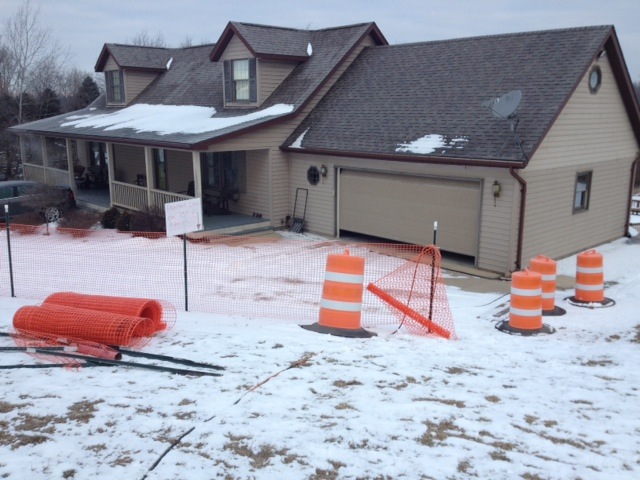
Today, we are proud to launch our new series: “Landowner Stories,” which will bring you the reflections of Line 6B landowners along Phase One– in their own words! Our first installment comes from Marty and Patti Burke, who live in Oceola Township. Their house is among those in closest proximity to the new pipeline.
The three barrels on the right mark the location of the pipe next to the Burkes’ home.
By Marty Burke
When I try to express verbally or in writing what the last two years has done to us both as a family and or community I become mentally/emotionally paralyzed a bit.
Lets take a look at the negative impact. For me unfortunately there still is not a single positive impact I can see here.
What has Enbridge taken from me?
1) My family’s sense of well being
That intangible feeling you have in your home that this is your place – your save haven – your central command of well being if you will. The place where you have to think, but just feel that it’s your place and because you have pride in it and work hard to pay for it no one can take it from you.
2) My trust in all levels of government from my township to the federal government.
I still struggle to understand every single day how my government, the exact people that are there, paid by me to protect my rights, to protect me from a foreign invader like Enbridge, could have abandoned me in my hour of need. That they could completely turn their backs on me and allow Enbridge without check to take my land/condemn my home and steal part of what I’ve worked for, paid for the last 20 years. I’ve canvassed all levels of governing bodies and found out that not one including our State/county/city/TWP regulators have a requirement for minimum distance a dwelling can be from a high pressure oil pipeline. How can that be when even our lowest level of regulation (TWP) can tell you how far your pole barn has to be from your garage or how far a shed can be from a property line but they have no requirement as to how far your home must be from an oil pipeline? Well, it’s pretty simple if they are involved in setting precedent that could cost Enbridge money (i.e., buying homes that violate the req.) they will be sued by Enbridge and they will lose. So … you and I pay the price for it. . . sounds reasonable, right?
3) My trust in law enforcement and the court system.
When I heard on our local Livingston county radio station that Our Sheriff was allowing Livingston county Sheriff’s deputies to work during their off time as contract security for Enbridge while wearing county uniforms/carrying weapons/driving county vehicles all paid for by the residents of Livinston county I just couldn’t believe it. How was this ever even considered by our Sheriff’s Dept.? How could they possibly have thought this would be in the best interest of our community?
How could it be that when I called 911 to report criminal trespass (by Enbridge) on our private road (Sue Dr.) the Sheriff’s Dept showed up and called the prosecutor’s office? The Livingston County prosecutor’s response was we won’t press charges on behalf of the residents of Sue. Dr.; it’s a civil matter, and I quote “the same as someone on Sue Dr. ordering a pizza and a pizza boy driving down the road.” Yet this same prosecutor was willing to press charges against me for not allowing Enbridge on my property because the site plan they had approved in court did not match what they laid out on my property (which included temporary workspace that was 3 feet from the foundation of my home). The Sheriff’s dept came to my home three times in this time frame to convince me to comply. The last time they brought a 400 lb process server to let me know it was my last chance before I go to jail – he also reminded me that my wife could be arrested too. I complied …. props to Enbridge ..they never lose, do they? Enbridge’s response to my situation would be this – it’s a shame Mr. Burke didn’t comply with us – none of this would have occurred.
4) My Privacy
A year before Enbridge ever broke ground on the line 6B project it was a beautiful sunny afternoon when my daughter came in from our pool and said dad a couple of guys came out of the woods and are in our back yard (remember I live on ten acres – this is not a normal occurrence). I was obviously not happy with this situation and went out to confront them.
They told me they were a contractor to Enbridge hired to do 3D mapping of my property. They were two football fields north of the Enbridge easement. They were in my backyard; the line is in my front yard. This was just the beginning of an endless cycle of unannounced visits by Enbridge and their agents/contractors often times in areas of my property that they no have right to be in.
Fast forward to construction phase – after a lengthy standoff the construction on my property commenced. Enbridge with all their prestigious Engineering savvy came to the conclusion at the last minute that they couldn’t dig the trench as close at it was planned to be to my house so they counterbored underground parallel to the front of my house under my driveway. Now at this point if I sit in my living room to chat with family/watch TV/read/work I’m looking at Enbridge workers walking back and forth in front of my home maybe 10 feet from my windows. They can look in (and they do) and see myself and my family – heck they can see what we’re watching on TV.
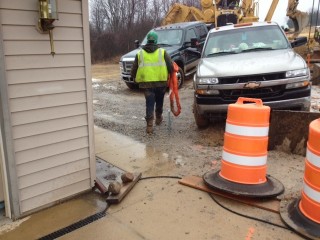
Construction vehicles and workers just a few feet from the Burkes’ home.
When I leave for work in the morning they are coming up my driveway – when I come home they are still there working – I can hear their voices from my kitchen while my wife and I are making dinner or talking. The sound of their equipment running constantly is maddening then slowly becomes numbing over time. There is a constant resonance/vibration in my home now and I can’t stop wondering is this hurting the structure of my home?
When I go out in my garage to work on a project there are Enbridge workers outside my windows and multiple Enbridge trucks parked 5 feet from my garage.
When I try to hunt on my property Enbridge workers call the Sheriff’s Dept. and tell them I’m shooting at them. And the Sheriff’s Dept. pays me a visit once again.
When I look out any window of my home I no longer see the beautiful views that I’ve grown used to. I now see workers, equipment, trucks, construction debris, mounds of dirt, and large holes and hazard orange ….hazard orange everywhere.
5) My Sense of well being.
One of the most insidious and difficult things to explain to someone not directly living this nightmare is the toll it takes on your general sense of well being. Not feeling like you’re coming home to your place of solace, instead dreading on a daily basis seeing the state of disarray your home is in. Not knowing how all of this will affect you this month, next month, or next year. Knowing you’re helpless to stop it. Knowing it will have a negative impact on the value of your home in already trying economic times. While these things may seem small to some on a point by point basis it has a cumulative effect on a person. In general you don’t feel hopeful about the outcome. This gut feeling spreads to other areas of your life like work for instance or social scenarios or family issues or health issues. You don’t always feel it but it’s there nonetheless.
Even connections we have with our neighbors are different, some are settling with Enbridge – others are not. Other ancillary issues arise that need consensus from all in the neighborhood, but now this is hard to come by as the “Enridge Effect” has polarized some and alienated others altogether, so coming together as a community just seems to be fractured.
I think this one has to be in the Enbridge handbook on disorientate, alienate, conquer, and divide. Props again to Enbridge.
6) Last but not least ….
The value of my property. Think about this …When Enbridge first approached us to get us to sign off on the “Plan” they had for our property their good faith offer was $6,000.00 . They had lots of charts and monkey math to show why this was more than fair. Keep in mind we would be closer to the proposed pipeline than any other home in our area.
Within a month we started hearing that some neighbors were settling with them with zero impact to their properties other than losing trees for ten times what they offered us.
Good Faith???? Enbridge’s approach to justifying what they do or don’t pay you for loss of value to your property due to their taking and their deplorable reputation is what the industry refers to as the Utility taking of your home.
They actually told me the utility they were taking was relevant due to the fact that there was already a pipeline there. Of course, they own the pipeline that was already there and we were never compensated for taking if you will. What a strange and self convenient logic …kind of like saying I shouldn’t pay for smashing your car because, it was already smashed -never mind the fact that I’m the guy who smashed it in the first place and never fixed it.
Bottom line is I’ve watched my homes value plummet while all others in my area are back on the rise. I have a nice, well maintained home on a beautiful piece of property only one issue – the new Enbridge easement now encompasses the front of my home. My home literally interrupts the north side of the easement.
For Enbridge this becomes a kind of self-fulfilling cost-save prophecy. The longer they wait to settle the less my house is worth (because of them). So the less the value of the taking they eventually pay for. The courts already allowed them to postpone my hearing date from June of this year to Sept of this year. I fully expect the court to allow them to postpone it again. It’s sheer ludicrousy. How can it be legal? How can it be happening?
How can our legal system allow a company with annual sales in the tens of billions to systematically rob individuals of just compensation? Never mind the dehumanizing effect Enbridge has on thousands upon thousand of individuals and families. They even get to offset their costs of doing business on the backs of real people, families, communities.
It truly is numbing and it truly is a nightmare. How can it happen in America? Who would let such a thing happen to us?
Who would put themselves in our shoes?
by Jeffrey Insko | Sep 8, 2013 |
This week, we’re going to relinquish a little bit of content-control of this blog in order to bring you a new, lengthy series: real stories from real Line 6B landowners. We’re going to let landowners tell you their own stories about their experience with Enbridge in their own words, with as little editorial intrusion from us as possible. But first, we’d like to say a few words in advance just by way of introduction to the series.
One of Enbride’s favorite strategies in the face of criticism has been to pretend that those who have been outspoken are really just a handful of disgruntled, hard-to-please complainers. Either that or all the ruckus is just the predictable rumblings of some easily dismissed “special interest groups.” Over the past year, we’ve seen various iterations of this specious point– from Patrick Daniel, from Larry Springer, from Tom Hodge, and, especially, from Jason Manshum. Not long ago, for instance, Manshum stated that, “the vast majority of landowners we’ve worked with are pleased with negotiations.” Like most things that Manshum says, that statement is almost completely unverifiable, unless Enbridge is sitting on some comprehensive survey of landowner satisfaction that they aren’t sharing, a survey that we and every landowner we know was not invited to participate in (in which case it wouldn’t be comprehensive). Larry Springer’s similarly disingenuous version of the same line a few months before was his statement that “In a minority of cases, Enbridge made several attempts to negotiate in good faith but was forced to resort to the court process.” (Seriously, has Springer spent 10 minutes in Michigan the past year? Does he really have the slightest clue as to what any individual negotiations were really like? Has he ever spoken to a single landowner on the Line 6B route, even when he had the chance? Does he have even the faintest idea as to whether the things he says about landowner relations are actually true?). Anyway, for a long time we’ve thought about how useful it would be to have some actual empirical data on this question of landowner (dis)satisfaction. After all, it is theoretically possible that it would actually prove Enbridge’s point and make us look like precisely the aberrant, tiny minority of complainers Enbridge would prefer to make us out to be. On the other hand, perhaps it would demonstrate just the opposite.
We’ve taken up this discussion before. In fact, you might recall that we even wrote to Manshum himself to ask whether he had any actual data to support his claims of overwhelming landowner satisfaction. But he never replied. You see, despite his misleading title of “senior adviser of community relations,” Manshum is not really in the business of forging relations with the community. His job is really just to toss out pleasing-sounding phrases for the press. Confronted with a real member of the community seeking to have a real discussion about real, substantive matters, Manshum (like the rest of Enbridge’s pre-programmed PR soldiers) ducks and dodges and hides.
Unfortunately, we have neither the time, the expertise, nor the resources to conduct the sort of careful study, controlling for all sorts of variables– what constitutes a “vast” as opposed to a simple majority? what counts as “pleased”? what happens if you exclude landowners who live on large farms or don’t occupy their property at all? what percentage of unhappy landowners is acceptable to Enbridge? — that could be empirically useful here. What we have instead are stories, lots and lots of stories. What’s interesting about them, though, is just how similar they are. We’re willing to accept– and forgive– the occasional “honest mistake,” which is how Enbridge reps like to describe certain incidents (we’ve heard this on multiple occasions). But when the same mistake happens not just a handful of times, but repeatedly, dozens of times… well, then we think you’re no longer dealing with mistakes; you’re dealing with patterns of behavior, standard practices, systemic problems.
So here’s what we did (in, we admit, a totally unscientific manner): we contacted as many landowners along Phase One as we possibly could and we asked them to reflect a little on the past year working with Enbridge. We asked them to be honest and to tell us what they thought and how they felt about their experience, bad, good, or otherwise. We asked them to pass along our call for contributions to their neighbors and others along the route whom we might not know.
Now, you could say– and we imagine Enbridge will say– that the responses we received and will share with you come from a self-selecting group. A bunch of complainers who are drawn to a complaining blog. Maybe that’s true. But we can say with certainty that our sample is far less selective (and much larger!), not to mention far less curated and orchestrated than what you get from the Enbridge marketing department when, say, they trot out “Dr. Michael Milan,” gussy him up in some fancy camo hunting gear, and have him pose for print ad photographs. So, while admittedly, it’s hard to say just how representative the stories we’re bringing you really are, there are enough of them to suggest that this is more than an aberration. And we can say with absolute certainty that you’ll be hearing from real landowners, ordinary people, your neighbors (to use a phrase Enbridge is fond of using)– not just a bunch of people who “are never going to be happy,” not “special interest groups,” not “professional opposition,” not even people who “oppose the pipeline,” and definitely not “revolutionaries.”
Our hope is that by gathering together a collection of these stories as a critical mass, Enbridge will, for once, set aside the defensiveness and the posturing, the denial and the carefully-honed messaging and do what it has thus far been either unwilling or unable to do: take a cold, hard, sober, honest look at itself, at the conduct of its land agents and representatives and its treatment of the fine people of the great state of Michigan, then decide for itself whether they have lived up to its own professed values.
Finally, if you are a landowner and haven’t heard from us or haven’t yet contributed, but would like to. Please send your thoughts and reflections here-– as long or as short as you like; a couple of sentences or a handful of paragraphy. We will happily maintain your anonymity if you prefer; just let us know whether you’d like your name to appear. Either way, we only ask that you specify your location (city, town, or township). We’re glad to respond to any questions as well.

by Jeffrey Insko | Sep 6, 2013 |
We apologize for the silence around here the past week or so. We took a much needed vacation over to the paradise that is Northern Michigan, spending lots of time at Sleeping Bear Dunes National Lakeshore. As always, it was energizing and a reminder of Michigan’s magnificent natural resources– all the more reason to continue doing whatever small part we can to protect them.
Now that we’re back, we’ve got a plea to make on behalf of our friends at the Pipeline Safety Trust. It’s time for the liquid pipelines industry to put up or shut up.
As you may recall, the Pipeline Safety Trust hosts an annual conference that brings together members of industry, regulators, and ordinary citizens to engage in productive dialogue about pipeline safety. We were privileged to attend and speak at the conference last year. It’s an invigorating and important event. The work that the PS Trust does is quiet, but vital. Ordinary citizens are a crucial part of that work. But here’s the problem:
The PS Trust isn’t exactly rich and the conference isn’t exactly cheap. It’s not easy or affordable for a lot of ordinary citizens to get to New Orleans to participate. In the past, the Trust has been able to subsidize much of that travel by securing external grants. Unfortunately, funding sources have dried up. And that means that a lot of citizens– think, for instance, of those people affected by the terrible spill in Mayflower, Arkansas– will likely not be able to attend.
To solve this problem, the Trust has embarked upon a fundraising effort. They’ve estimated that they’ll need to raise about $15,000- 20,000. We think this this sort of crowdfunding is great and we hope you will consider donating something small. It’s worth a few dollars, we promise. But having said that, here’s the thing:
It should be obvious to everyone where the money for this travel should come from. It’s not the PS Trust or the regulatory agencies or ordinary people who have the resources to fund this sort of thing. It’s industry. We’re talking here about corporations that make hundreds of millions of dollars in profit a year. There’s probably $20k in loose change between the cushions of the couches in the lobby at the corporate headquarters.
But the fact that industry can easily generate the sum the PS Trust needs is the least of the reasons why they should pick up this tab. The more important reason is because it’s in their interest to do so. Regular citizens, particularly landowners with pipelines running through their properties, are crucial players in pipeline safety. Everyone agrees on this. We are the first first-responders. We are supposed to be partners, collaborators in pipeline safety.
In fact, that’s exactly what the industry says. The pipeline companies profess to be committed to cultivating productive partnerships and engaging in open dialogue with citizen stakeholders. For instance:
- PG&E says that “Engaging with our stakeholders is an essential part of our approach to sustainability—and an area of continued emphasis for PG&E. Doing so enables us to learn from, inform and problem-solve with our diverse stakeholders.”
- Exxon Mobil insists that “Continued dialogue is critical to the long-term relationship between our employees and our neighbors. That’s why we invite community members to discuss their concerns with us.”
- TransCanada says that “Everything we do depends on the strength of our relationship with local residents.”
- Williams Pipelines “takes great pride in the relationship of trust and harmony we’ve developed with the many landowners and communities with whom we co-exist.”
- Spectra Energy asserts that “community stewardship means listening to and being responsible members of the communities we serve. We engage local stakeholders affected by our projects and ongoing operations early and often…”
- And Enbridge says that “developing and maintaining good relationships with our stakeholders – the landowners, tenants and neighbours along our pipeline system – is important to us.” And one of the ways they do this is by “consulting with the individuals who live along our pipelines, and with those who may become our neighbours as our pipeline network grows.”
Other companies make similar claims. And we want to believe them. We really do. So here is a chance for them to make good on all of those assertions, to actually go out of their way to ensure that landowners are in attendance at a gathering specifically designed to foster the kinds of engagements, consultations, and relationships of trust and harmony they claim (publicly) to value. Here is a perfect opportunity for those corporations to put their money where their collective corporate mouth is. In fact, it would be a PR coup for them. They could announce their donations on their websites, tout them in their next annual corporate responsibility reports, make them a talking point for their Jason Manshums and Shawn Howards. Heck, we would even praise them right here in this blog for making good on their stated commitments, for taking action commensurate with their words!
And it would hardly cost them a thing. What is, say, $5000 to a billion dollar corporation? Any one of the companies I’ve listed above could cut the Pipeline Safety Trust a check for the full $20k and not even miss it. Just a quarter of that from each of the six I’ve listed above and the PS Trust’s goal would be exceeded by a third.
Or, to put this another way, just consider: in 2011, the total compensation of Stephen Wuori of Enbridge exceeded six million dollars. According to the same source, Russell Girling of TransCanada made about the same. And Christopher Johns of PG&E made more than five million. Do you think that between the three of them they could come up with a mere $15,000 dollars to demonstrate their commitment to pipeline safety? Or better yet, why don’t they show some real vision and leadership by establishing a permanent fund specifically designated for citizen travel to the conference every year and distributed by the Trust, thereby permanently sparing Carl Weimer, who has much better things to do, from ever again having to go around panhandling?
So we’ll see what happens. If the funding for citizen travel does not materialize– or if it only comes from committed and generous people who are NOT from the industry– then we’ll know for sure whether all the industry talk about engaging and consulting landowners and neighbors is a reality or just pleasant-sounding rhetoric.
by Jeffrey Insko | Aug 23, 2013 |
While Enbridge works hard this week to woo the press (much more on this coming up later), they’re also taking some lumps. Comstock Township, like the EPA last week, has considered Enbridge’s request and then told them “no.” Late last night the Township Planning Commission voted unanimously to deny Enbridge special zoning for a dredge pad as they continue to clean up the Kalamazoo River. Lindsey Smith at Michigan Public Radio has the story. Evidently, residents and Bell’s Brewery owner Larry Bell were mighty pleased with the outcome.
Because we don’t know enough about the issue, we never really took a strong position on the dredge pad matter, except to say that in general we think it’s good policy to defer to local authority and community desires on such matters. We’re pretty big fans of local autonomy when it comes to the protection of landowners and natural resources. In fact, Enbridge’s callous disregard of local authority and concerns has been one of the major themes of this blog for more than a year. With that in mind, we’ll indulge in one little observation:
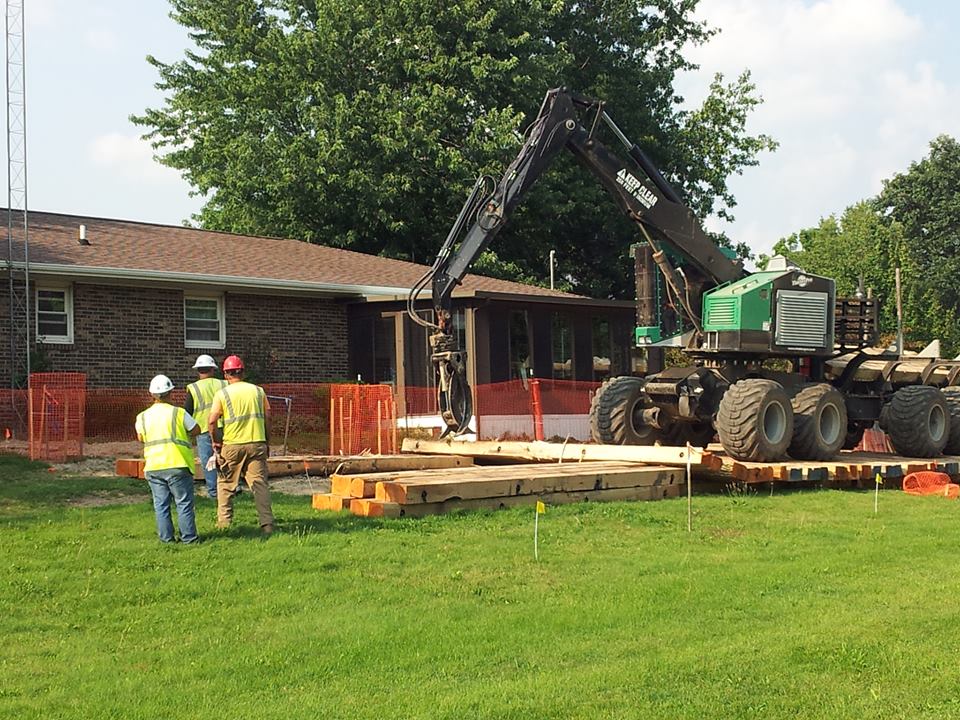
It now appears that Enbridge is going to have real trouble meeting the EPA mandated deadline for this latest round of clean up. And they probably think it’s all Larry Bell’s fault. But they have no one to blame but themselves. This dredge pad situation is a nearly identical replay of what happened on phase one of their project. They tried (despite their stated values) to take the easy way out and circumvent local ordinances. And what happened? Just like in Comstock Township, some brave local officials and concerned citizens cried foul, causing Enbridge to slow down, then scramble to make nice so they could resume their work after some long and painful (to Enbridge) delays. The result? The whole thing took far more time and created far more acrimony and bad feelings than it would (or should) have if Enbridge had simply gone about it thoughtfully, respectfully, and cooperatively in the first place.
In this context, the Comstock Township just demonstrates yet again that Enbridge appears incapable of learning from its mistakes.
by Jeffrey Insko | Aug 22, 2013 |
If you’ve been paying attention, you’ve probably noticed that there has been a flurry of Enbridge Line 6B coverage this week. A great deal of it centers upon the harrowing situation at the house of our friend Dave Gallagher in Ceresco (and more and more). And the rest has been instigated by Enbridge itself, which has decided to launch a charm offensive with the press lately (see this and this). We can’t help but think these things are related; Enbridge seems to enjoy few things as much as a pr battle.
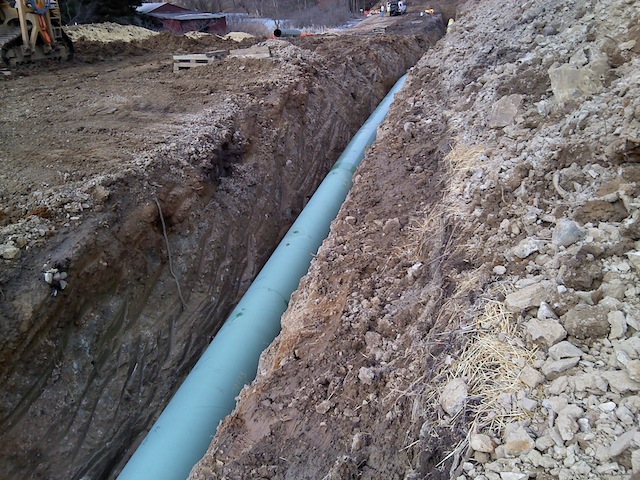
Anyway, we think Dave’s story is worth paying attention to. But not only because of the dramatic pictures and videos–and they certainly are dramatic. It’s also important because it illustrates vividly how and why Enbridge has bulldozed its way (literally and figuratively) through the state. In fact, we think that Dave’s situation represents a teachable moment. After all, plenty of other people on this route have experienced what Dave is going through– have you seen the pictures from Beth Duman’s house? Or Amy Nash’s? There are properties right in my neighborhood where the pipe runs within 10 or 15 feet of dwellings, just as it does Dave’s. Dave’s situation, and he’ll be the first to tell you this, is awful, but it’s far from singular.
Unfortunately, much of the press is unlikely to avail itself of the teachability of this moment. This is particularly true of television news. Witness, for instance, this rather awful report from Tom Hillen at WOOD-TV out of Grand Rapids. Go ahead and watch. We’ll continue after you’re done…
There are a number of serious problems here, not all of which are entirely Tim Hillen’s fault. Let’s review:
First and foremost, there are the remarks of the now-ubiquitous Jason Manshum, who unlike most of us has a job where he gets to say things all the time without ever being challenged or without worrying about whether what he says is at all verifiable. This time, he addresses Dave’s concerns that his property value will plummet. In response, Manshum says this:
“Studies have shown on our pipeline as well as other energy transportation companies that values — home values — do not decrease with pipelines. There is not a direct correlation that we have found,” Enbridge spokesman Jason Manshum said.
Those are certainly interesting claims and we would be very eager to verify whether thy are in fact true. For that reason, we’ve written to Manshum asking to see his data. Unfortunately, if history is any guide, he will ignore our query– because, as we said, Manshum lives in a dream-world where it doesn’t much matter whether his assertions are backed by any actual evidence. We’ll keep you posted.
The next problem with the report– and it is a MAJOR problem– is in fact Hillen’s fault. Here is what he says:
Enbridge is able to do the work because it has an easement on Gallagher’s property, which means it owns some of the land in his backyard.
Now, it’s not clear here whether this is something that Enbridge said to Hillen or whether Hillen generated this statement on his own. But one thing is clear: this is absolutely NOT TRUE. And the fact that it is not true is why this report is not only sloppy, but positively harmful. It does a tremendous disservice not only to Dave Gallagher, but to public discourse. It feeds a terrible misconception about property rights in general and Enbridge’s treatment of landowners in particular.
An easement does NOT mean that Enbridge “owns some of the land” on someone’s property. Dave Gallagher owns that land, period. An easement (or a right of way) simply means that Enbridge has the right to access and use that land for specific activities as specified in the easement agreement. They do NOT get to do whatever they want with it whenever they want to. They do not have total control over that property nor do they have total control over what Dave Gallagher does with that property. Even Enbridge would not dispute this. They can’t dispute it because it is a legal fact. And because easement rights are not ownership, it is entirely possible for easement holders (like Enbridge) to abuse or overstep their easement rights. (One might even argue that Enbridge has abused its easement rights). But just because Enbridge would not or cannot claim that they “own” the land for which they hold rights-of-way doesn’t mean that they’re not perfectly happy to have landowners and the public believe, mistakenly, that having an easement means owning that property. The more people believe that, the less likely Enbridge’s activities are to be challenged; the less likely know-nothings who post internet comments on stories like this one are to sympathize with situations like Dave’s. That’s just the way Enbridge likes it.
The last problem is the fault of Enbridge and Hillen both. On the subject of eminent domain, this is what Hillen says:
Enbridge says they didn’t have to pay Gallagher or other land owners, but they do because they want a good relationship with them. According to Manshum, Enbridge has eminent domain, which would give the company the right to lay the pipeline no matter what.
This is misleading at best. What does Manshum mean when he says Enbridge “didn’t have to pay… land owners”? That they don’t have to pay for exercising their easement right? That may be true, depending upon the easement agreement. But in most cases, that’s beside the point. Rather, the issue of payment frequently has more to do with (a) the acquisition of NEW easement rights– which is the case with Dave’s property. For that, they do have to pay; and (b) the use of “temporary workspace” and whatever damages that use causes. On our property, for instance, Enbridge took (temporarily) an additional 65 feet outside their existing easement. That’s where most of our trees and our garden were. Enbridge DID have to pay for that; they did not just pay us “because they want a good relationship with” us, as Manshum claims. They were legally obligated to compensate us for damages.
Perhaps even worse, though, is both Enbridge’s and Hillen’s glib treatment of eminent domain. Manshum trots it out, callously, like a sort of trump card and in doing so characterizes the whole situation so that it appears that every scrap and crumb Enbridge gives out is a sign of its tremendous generosity, when if they really wanted to they could just trample on us all like cockroaches. This is exactly what Enbridge VP Mark Sitek said to us after we went round and round for quite some time. One can only assume that this is what Enbridge really believes, despite all the good neighbor rhetoric: “you helpless, groveling peasants ought to be grateful we’re giving you anything at all!”
Hillen and his colleagues are all too happy to promulgate this view. Just watch their daft back and forth about it at the end of the report, shrugging their shoulders about eminent domain as if it’s just a fundamental law of the universe: “yeah, that’s just how it is with gravity. Nobody could stop that apple from falling from that tree.” The problem, however, is that eminent domain is NOT a natural law. Enbridge was granted that right by the Michigan Public Service Commission, through a process that, as we have written about exhaustively, was deeply flawed and failed to serve the interests of the citizens of this state. Hillen had a chance to explore that, to initiate a discussion about the use (and abuse) of eminent domain. But he did no such thing. Instead, he simply demonstrates that he doesn’t really understand eminent domain law any more than he understands easement rights.
As a result, a chance to actually inform the public, to explain to people why, aside from mere “inconvenience,” landowners might have some legitimate complaints, to use Dave Gallagher’s terrible story to help people understand easement rights or how and why foreign companies are granted the power of eminent domain, or to initiate some important discussions about matters like property rights and energy policy and our regulatory systems, things that ought to be of interest to every citizen, is missed. And because of that, even though Enbridge isn’t running bulldozers right outside all of our living rooms, we’re all still getting Gallaghered. Score another one for Enbridge.
by Jeffrey Insko | Aug 19, 2013 |
Update, August 20, 2013: Well, it turns out that what looked like a very big Enbridge whopper (details below) is actually just a run-of-the-mill bit of Enbridge misinformation. Reporter Tina Casagrand has the clarification from Enbridge in a comment to this post. We are glad for spokesperson Katie Lange’s sake that she wasn’t actually saying that the Marshall spill was the result of “something that was stuck in the pipe.” Unfortunately, the clarification doesn’t actually bring all that much clarity to the matter. Here’s why:
Enbridge now says that “the incident” to which Lange’s refers in her statement is the discharge that resulted from a hydrotest of the new Line 6B earlier this summer. (You might remember that we wrote about it at the time.) We’ll take them at their word on this. The problem, however, is that the statement is STILL inaccurate and even, it seems, rather disingenuous. The inaccurate part is that the incident did not take place in Marshall. Ore Creek is in Tyrone Township, Livingston County, nowhere near Marshall. The disingenuous part is that Lange says Enbridge didn’t “purposefully” violate the permit, suggesting instead that the violations were the result of something getting stuck. However, if you look at the violations-– there are ELEVEN of them– it’s hard to see how any of them could have been the result of something getting stuck in the line. For instance, (just to name a few) the DEQ cites Enbridge for not having any on-site representatives during the discharge, for not taking any samples of the discharge on June 17 (three days before the discharge), for not conducting water inspections as required the week before the discharge, and for not inspecting their equipment as required. As far as we can tell, none of these things have anything at all to do with something getting stuck in the pipe. So the question that remains is whether Enbridge failed to perform these required actions “purposefully,” as Lange claims. Maybe that’s a difficult thing to determine, we guess. But if the violations aren’t the result of an accident (and the evidence suggests they weren’t), and they were not purposeful, that only leaves one alternative: incompetence. That is not very comforting.
_____________________
Two very interesting stories appeared in newspapers today written by talented young reporters. Over at the St. Louis Beacon, Tina Casagrand has an excellent piece about Enbridge’s Flanagan South project. As we’ve noted before, this is another one of Enbridge’s clever schemes to out-Keystone Keystone XL. This line will head south through the midwest and eventually make it all the way to the coast. And the most disturbing part? Even though it crosses an international border, Enbridge has once again found a way to skirt the presidential permitting problem and avoid public scrutiny. And also once again, the project is mostly flying under the radar while almost all eyes remain fixed on KXL. This is one reason Tina’s piece (and others that have appeared before it) is so very important.
But the most extraordinary thing of all in the article– and, honestly, we thought we’d heard it all by now– is what Enbridge spokesperson Katie Lange has to say about the Marshall spill. If you’re not sitting down, you might want to. At least be sure you’re holding on to something solid. This whopper is even worse than the infuriatingly dishonest story Enbridge VP of Operations Richard Adams told to the EPA a couple of weeks ago. Okay. Are you ready? Here’s Lange on Marshall:
“For the incident in Marshall, it wasn’t that Enbridge purposefully violated, it was something that was stuck in the pipe,” added Lange.
Something stuck in the pipe?! We have long been baffled and angered by the misleading, disingenuous, obfuscatory, and inaccurate things that Enbridge spokespersons– the Larry Springers and Jennifer Smiths and Jason Manshums say. But this one has to take the cake. One can only wonder where in the world poor Katie Lange got that patently false piece of information. Surely she or someone at Enbridge will call Tina to correct it. Right?
The other interesting story today is from Ursula Zerilli over at MLive, who is following up on her article from last week. For some strange reason, Enbridge decided to get chummy with some reporters as they kick off phase two of the project and so (evidently) reporters got to ride around in a van with Tom Hodge and some others. But unlike last week’s article, in this one Ursula speaks with some Enbridge critics, among them our friend Dave Gallagher, whose situation as an affected landowner is a real nightmare– just get a load of the picture that accompanies the article! The article also features some remarks from inspector Raymond Ashley, who appears to have a real penchant for forced, mawkish metaphors:
“We are trying to weld more than just this pipe together,” said Raymond Ashley, who was proudly wearing a photo of his granddaughter as a badge. “We’re welding more than just a pipeline. We need to bond together the environment, safety and the integrity of this pipeline. We have one day to build integrity and that’s today.”
Anyway, while we think the article is accurate and fair (she even emphasizes Enbridge’s slow response to Marshall), it also left us a little dissatisfied for reasons that might be worth explaining in a bit of detail. The reason we’re dissatisfied– and we don’t really blame Ursula for this– is that the article lacks nuance. It lacks subtlety and complexity. Again, this isn’t really Ursula’s fault. We live in a (news) culture that likes simple binary narratives– us vs. them, black vs. white, good guys vs. bad guys. That’s what (or so editors seem to think) appeals to people. Making this even worse is that Ursula was probably only given about 800 words in which to tell her story– hard to be nuanced in such a short space. Yet nuance is important. Here’s why:
One comes away from the article with a simple dichotomy: there are pipeline proponents (like Tom Hodge and Enbridge) and there are pipeline opponents (the protestors from MICATS). They are the article’s protagonists and antagonists (we’ll let you decide who’s who!). But the problem with this narrative– which pits people who don’t want pipelines against people building pipelines– is that it is precisely the way that Enbridge wants to have this story framed. It’s why former Enbridge CEO likes to talk about “revolutionaries” and why Enbridge spokesman Larry Springer talks about “special interest groups.” That kind of story serves Enbridge’s interests perfectly because it allows them to sound reasonable and pragmatic, while casting everyone else as a little bit crazy, on the fringes, out of the mainstream. So, for instance, Tom Hodge gets to say things like this:
“It’s hard to understand their logic,” he said of those protesting the pipeline replacement project. “It seems like they want us to turn the pipeline off or just not replace this pipeline, which already ruptured. There’s not a good alternative to what we are doing and we feel like it’s a good thing for the State of Michigan.”
And this:
“There would be riots in the streets if food wasn’t being delivered or if fuel wasn’t being delivered,” he said. “I’m all for having an alternate fuel, but until that becomes available, there’s no other option. You can use natural gas but that has to come by pipeline, too. If that ruptures, it’s not a polluting event like oil … It’s a fireball.”
See how that works? Hodge makes it sound like the alternatives are clear and stark: EITHER Enbridge gets to build whatever pipelines it wants to build however it wants to build them OR there will be riots in the streets because people are starving. I mean, what kind of person would be in favor of people starving?!
But here’s the thing: that is complete and total and utter nonsense. It is a ridiculously false choice. Those are quite plainly NOT the only alternatives. People are not going to starve and riot in the street if Enbridge does not get to pump 800,000 barrels of tar sands oil a day across Michigan through a shiny new Line 6B. No serious person believes any such thing. And yet Hodge gets to imply as much and, in doing so, also gets to come off as the person who is being rational and realistic.
And that’s not even the worst part. The other reason this simplistic (and largely false) narrative of people in favor of the pipeline vs. people opposed to the pipeline serves Enbridge so well is because it allows them to evade the real substance of most of the real criticism of the way they have conducted themselves in Michigan over the past three years (or more). As we have said over and over and over and over again (so often we don’t even have the energy to provide links anymore), the problem isn’t that they’re replacing Line 6B. The problem is how they’ve gone about it. Most of us do not oppose the “replacement” of the line– a new pipe is obviously better than an aging pipe. That has NEVER been the issue. What we object to is the way that Enbridge has cleverly skirted federal regulations, the way they have abused their easement rights and mistreated landowners and trampled property rights, the way they have misinformed people, the way they have flouted or ignored local authority and thrown their weight around, the way they have essentially re-written Michigan law to serve their own financial interests. All that plus the fact that we have a bunch of elected officials and a set of pathetically weak regulatory systems that allows all of this to continue.
Those are the real issues. And they are issues that affect and therefore ought to concern all the citizens of the state of Michigan. To pretend otherwise– to pretend that it’s a simple matter of energy production vs. a handful of environmental radicals– does nothing but allow Enbridge to avoid having to face any of the things I’ve described, to avoid ever being confronted with genuinely tough questions. So once again, as always, Enbridge gets exactly what it wants.