
by Jeffrey Insko | Aug 20, 2019 |
If you’ve been paying attention to Line 5 matters in the past few weeks, you may have noticed that Enbridge has turned up the volume on its campaign to gain public support for its phantom tunnel. In addition to their own radio spots, Enbridge has enlisted some of their influential friends in the effort, like the Michigan Chamber of Commerce and even the powerful American Petroleum Institute. More recently, it appears they have convinced some credulous county commissions to join in their public relations effort by adopting a formal resolution in support of Line 5. It’s not clear who wrote the thing and at least one commissioner claims it wasn’t Enbridge, but from start to finish it is taken verbatim from well-worn Enbridge talking points.
Unfortunately, this is an old pattern. As a landowner who lives along the Enbridge Line 6B pipeline route, I have spent years observing, recording their misdeeds, and sometimes even working closely with Enbridge. During the replacement project, I watched over and over as sweet-talking Enbridge reps seduced local officials into believing their every word. What’s disheartening about this dynamic is that we have mountains of evidence that Enbridge’s words can’t be trusted. Since the Marshall spill in 2010, Enbridge has compiled a long and not-so-distinguished record that illustrates vividly how they deal with Michigan elected officials. Perhaps these county commissioners are unaware of this sordid history. So let’s recall just a handful of examples:
- In the days following the spill in late July 2010, then Enbridge CEO Patrick Daniel was asked repeatedly by reporters if the material spilled from Line 6B was tar sands oil. On more than one occasion, Daniel categorically denied that the line carried tar sands. Pressed on the question by reporters days later, Daniel finally conceded the point, but not without some verbal gymnastics and hair-splitting that included denying his original denial. This failure to be honest had severe consequences. It meant that residents along the river were not evacuated as soon as they probably should have been and it rendered initial cleanup efforts less effective, as first responders assumed they were dealing with conventional crude, which behaves differently in fresh water.
- Beginning in 2011, when Enbridge embarked upon its replacement of Line 6B across the State of Michigan, they left countless landowners feeling mistreated, misinformed, and taken advantage of. They also dealt dishonestly with local officials. When one township dared to ask Enbridge for compliance with their local ordinances, Enbridge dragged its feet and made all manner of false promises and assurances in a tortuous process that dragged on for months. At one point, the township supervisor offered this frank assessment:“Enbridge does not appear to be sincere in what they have communicated to the township.
- Nor was Enbridge’s lack of sincerity confined to its dealing with township officials. Midway through the Kalamazoo River cleanup, Enbridge Vice President Rich Adams offered up a brazen falsehood to the Environmental Protection Agency—in writing. In 2013, Enbridge sought an extension of the EPA-imposed deadline to complete its dredging of the river. In his letter making this request, Adams specifically claimed that Enbridge had “promptly applied for all necessary local permits for the operation.” But in fact, the reason Enbridge’s dredging work was delayed was precisely because Comstock Township officials discovered that Enbridge was beginning work without having sought the appropriate permits.
- At times, Enbridge has difficulty speaking forthrightly about even the simplest of things. In 2014, Enbridge took out full-page ads in Michigan newspapers to commemorate the anniversary of the spill and to convince the public that the spill was an event they would always remember. President Brad Shamla put it this way, “July 26, 2010 is a day no one at Enbridge will ever forget.” But of course everyone knows that the spill did not happen on July 26; Line 6B ruptured on July 25. It took seventeen hours for Enbridge to discover the spill, a fact that their public remembrance apparently tried to make everyone forget.
- Enbridge has proven no more trustworthy in its communications with the state about Line 5. In 2017, Enbridge ensured members of the state’s Pipeline Safety Advisory Board that the protective coating on Line 5 was without defects. Later, however, it was revealed that Enbridge knew about damage to the pipeline’s protective coating in 2014 but failed to disclose the information to state regulatory agencies.
Further examples abound (preserved in the Line 6B Citizens’ Blog archives); these are simply some of the most egregious. The lesson is clear. For nearly a decade, Enbridge has exhibited a pattern of behavior that indicates they will say or do almost anything to advance their own interests. They have withheld information, dissembled, and distorted the truth repeatedly in their dealings with Michigan elected officials at almost every level. In the face of such demonstrable evidence of their untrustworthy actions and at an historical moment that calls for urgent action to mitigate the effects of climate change, why would state elected officials—whether it’s the Governor, the legislature, or count commissioners—trust Enbridge to do what’s right for the Great Lakes and what’s right for the planet? The tunnel is never going to be built; it’s a fantasy, a cheap ploy to stall, delay, and keep Line 5 up and running as long as possible. Let’s not let our elected representatives continue to act as Enbridge’s dupes.
by Jeffrey Insko | Jun 4, 2019 |
Like me, many of you are probably old enough to remember watching the popular 1970s television game show “Name That Tune.” Contestants would compete against one another to see who could identify a song by hearing the fewest notes. One contestant would claim she could name that tune in, say, five notes; her competitor would try to do so in fewer.
I thought of this game last week when, in response to increasing pressure from Governor Whitmer and Attorney General Nessel for some kind of resolution to the ongoing Line 5 problem, Enbridge suddenly began playing a game of “Name that Construction Deadline.” A 7-10 year timeline quickly became 5, as Enbridge claimed its engineers had discovered some fancy new technology that could have their concrete tunnel complete and a new Line 5 up and running by 2024. Since then, Governor Whitmer has intimated that even five years is too long to wait. So don’t be surprised if Enbridge somehow projects an even earlier date: “We can build that tunnel in four years. Maybe three!”
But however much Enbridge would like to convince Michigan state officials that their new five-year timeline is feasible, the reality is that it’s no more likely than the possibility that a contestant on “Name That Tune,” backed into a corner by her competitor, can identify a song by a single note. Last week, I explained why five years (and probably even ten) is a ludicrous claim. I also pointed out that Enbridge likewise knows how unlikely that projection is, which is why they had their army of lawyers churning out legalistic disclaimers about “forward-looking statements.” And I provided some telling examples of Enbridge’s unfortunate habit of missing deadlines.
Yesterday provided another illustration of just how unrealistic the 2024 projection is. You may have heard that Enbridge has also proposed a new pipeline project up in Minnesota. Their plan is to replace their aging– and ailing– Line 3 pipeline (which I’ve written about in the past). The trouble is, they’ve chosen a route that all sorts of sensible people, from ordinary citizens (with whom I’ve been fortunate to meet and speak) to tribal groups, find objectionable, not least because it would cross through some very sensitive waterways, including the headwaters of the Mississippi River. As a result, Enbridge’s plans have been bogged down by regulatory processes, legal interventions, and activism.
Sound familiar? Let’s roll the tape on Line 3, keeping in mind that this is exactly what’s in store for Line 5 if some kind of tunnel agreement is reached:
Enbridge announced the Line 3 project in spring 2014. At the time, they acknowledged that the project would require both a presidential permit from the U.S. state department and regulatory approval from the Minnesota Public Utilities Commission. Taking those approvals into account, Enbridge projected the new Line 3 would be up and running in late 2017.
But by 2017, the project remained in regulatory limbo in Minnesota. Despite that uncertainty, Enbridge plowed forward with the project, beginning construction in Wisconsin and anticipating that construction in Minnesota would begin some time in 2018. These new projections would have the line operational “sometime in 2019.”
A year later, Enbridge was feeling optimistic after the Minnesota PUC gave its approval to the project in June 2018. In response to that news, Enbridge optimistically predicted that construction could begin in early 2019.
But here we are midway through 2019 and Enbridge still hasn’t received all the necessary permits to begin construction. Facing that reality, last March Enbridge announced that Line 3 would be placed in service “a year later than anticipated.” The new projection, then, would have a new Line 3 pumping oil some time in 2020.
Then came yesterday’s news: a Minnesota Court of Appeals ruled that the state’s environmental assessment failed to consider the effects of a spill on the Lake Superior watershed. The ruling therefore reversed the PUC’s approval of the project. A new environmental review is sure to take many months to complete, which means Enbridge would be lucky to begin construction before 2020. That means the best case scenario for Enbridge’s Line 3 start up is probably 2021— assuming there are no more delays, courts challenges, protests, or other impediments.
Get the picture? In 2014, Enbridge projected a 2017 startup date for Line 3, which got pushed to 2019, then to 2020, and now (in all probability) to 2021. There is no end in sight– there is not even a beginning in sight– for Line 3.
Does anyone believe things will go any differently for Line 5? Does anybody believe for one second that Enbridge’s new five year timeline is even remotely plausible? 2024 is 2026 is 2028 is 2029 is…
So I’ll say it again: there is no future for Line 5.
by Jeffrey Insko | May 30, 2019 |
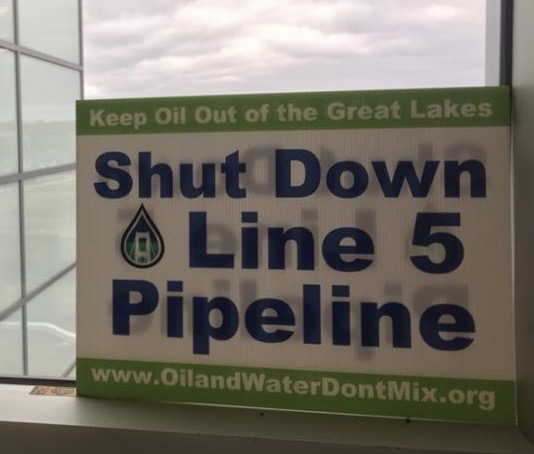
A couple of weeks ago, I wrote about the history of Line 5, arguing that its decommissioning should be understood not just as a preventative measure against imminent disaster, but as a matter of environmental justice, of damage already inflicted. Given the stern comments of Attorney General Dana Nessel this week, it’s worth shifting our gaze forward and acknowledging what everybody knows but not everybody wants to admit: there is no future for Line 5.
Enbridge surely knows this, though they’d never admit it. And who can blame them? Their job is to transport oil and they’ll keep trying to do it as long as they possibly can. Nobody likes to imagine the inevitability of their own obsolescence. But the Line 5 tunnel scheme has always been about delaying the inevitable. It’s worth remembering, for example, that Enbridge hatched the plan less than 2 years ago. Before that, Enbridge insisted the current line is “fit for service” and could “operate indefinitely.” Only when the previous gubernatorial administration started talking tough and public pressure heated up did Enbridge start talking about “alternatives.” In other words, the tunnel idea has never been anything other than a transparent attempt to placate state officials. Enbridge can’t possibly want to build it. Large corporations are notoriously short-sighted after all. Why make a half billion dollar capital investment in infrastructure they insist doesn’t even need to be replaced? It’s a wonder so many people have fallen for this.
Even if Enbridge did want to build it, it’s hard to imagine it will ever really happen. For more than a year, Enbridge has said that construction will take 7-10 years. But this week, with Governor Whitman and AG Nessel both expressing impatience with that length of time, Enbridge’s engineers have suddenly– miraculously!– discovered that they can build the tunnel in under 5 years. (You really can’t make this stuff up.) But anyone who has paid any attention to Enbridge over the past decade knows that its history of construction timetable projections and its track record in the state of making deadlines does not engender much confidence. We were told, for instance, that the Line 6B replacement would take about 4 months. It took three years. In addition, Enbridge has a troubling habit of failing to meet deadlines (see here and here and here). So whether you start with 4-5 or 7-10 years, you can expect much longer than that.
All of which is unlikely to matter anyway, since any Line 5 tunnel construction activity is certain to be delayed for years by lawsuits, legal interventions, environmental assessments, and protests. Just this week, the Anishinaabek Caucus of the Michigan Democratic Party issued a statement, in solidarity with the 12 Tribes of Michigan and the Chippewa Ottawa Resource Authority, affirming its opposition to the tunnel and announcing its intention to exert its rights under Federal Treaties. Tribal groups alone could delay approval of a tunnel plan for who-knows-how-long. And that’s to say nothing of environmental groups, business owners, and others who will surely try to intervene, through various means, in the courts and in the state approval process. Thus I couldn’t help but chuckle when an Enbridge representative said yesterday, “Assuming we work through a normal permitting timeline, we should be under construction by 2021.” Enbridge can’t possibly believe the timeline for securing approvals for such a controversial project will be anything close to “normal.” Even the Line 6B replacement, a project that generated very little organized protest one that virtually everyone supported, took far, far longer than anyone would expect under a “normal permitting timeline.”
So even under a best-case scenario (for Enbridge) approval of the tunnel project, even with the Governor’s support, is years away. But by that time the visible effects of climate change are only going to be worse, public awareness of ever-increasing global temperature rises greater, and public demand for political action to curb greenhouse gas emissions much louder than it is even now. In ten years, it’s doubtful that anyone, including many of Enbridge’s current supporters, will have the stomach for a 100-year fossil fuel infrastructure project.
My hunch is that Enbridge knows all of this. In fact, I suspect they’re banking on it. It’s going to cost them less to pay their crafty lawyers for 5 or 10 years than it will to build that tunnel. And all that time, they hope, they’ll get to keep the current lines pumping away while pretending that they’re not the ones preventing them from being encased in concrete under the lakebed. It’s a clever ruse. But it is a ruse. And it’s time to stop playing along. AG Nessel has threatened to take steps to shut Line 5 down if a deal is not reached in the next thirty days. But there’s only one deal to make: not one involving a chimerical tunnel, but a plan and a timeline for the permanent removal of Line 5 from beneath the Straits.
Update (May 31, 2019): Even Enbridge knows that their expedited timeline is ludicrous; their own press release devotes three long, legalistic paragraphs to explaining their use of “forward-looking” language. Translation: “we’re totally just making this stuff up; please don’t hold us to any of it.”
by Jeffrey Insko | Apr 30, 2019 |
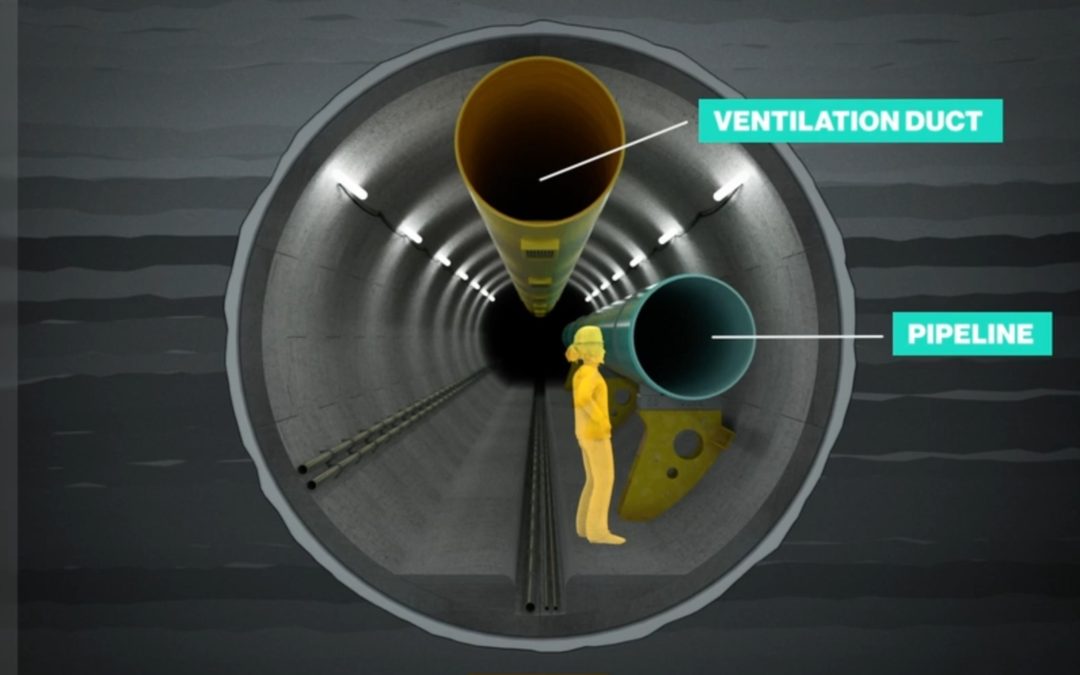
Recently, Governor Whitmer, who campaigned to shut down Line 5, seemed to reverse course and expressed a willingness to consider Enbridge’s absurd scheme to build a concrete tunnel to house the Line 5 pipelines. What led to this surprising retreat from her tough stance on the campaign trail remains opaque. But one can’t help but think that what we have here is yet another instance of Enbridge, its deep pockets, and its vast cadre of crafty lawyers manipulating yet another state official. Enbridge has been trying, often with success, to play Michigan’s elected leaders for fools for at least a decade: they dissembled for days about the type of oil they spilled into the Kalamazoo River in 2010; they hoodwinked the Michigan Public Service Commission into helping them re-write Michigan law to their own advantage; they dealt dishonestly with township officials and landowners during the replacement of Line 6B; they told a brazen lie to the EPA in their attempt to skirt local authority during the cleanup of the Kalamazoo River; and at one point, they even tried to convince the public that the Kalamazoo spill didn’t happen when it happened.
[perfectpullquote align=”right” bordertop=”false” cite=”” link=”” color=”” class=”” size=””]Whitmer promised an end to these manipulations.[/perfectpullquote]
Whitmer promised an end to these manipulations. Yet here we are again, this time discussing, studying, considering, and debating whether the State of Michigan should encourage and permit a massive, decades-long investment in what is in reality a mid-20th century infrastructure project: a concrete tunnel beneath the Straits of Mackinac that will keep Line 5 running for another 100 years, a ludicrous plan. The very real threats that transporting oil beneath the Straits poses to the world’s largest body of fresh water have been well documented. So, too, has the urgent need to curb greenhouse gas emissions in order to prevent climate catastrophe, the effects of which promise to be especially severe in the Great Lakes region in the form of rising water levels, infrastructure collapses, heat-related deaths, and dramatically reduced agricultural yields. Now is clearly not the time to encourage more fossil fuel development and consumption. Even energy market analysts are growing increasingly wary of investments in new pipeline projects.
For these reasons alone, the fact that Enbridge has convinced anyone at all to take seriously their outlandish tunnel scheme is astonishing. It’s doubtful even they take it seriously as anything other than a stalling tactic. In addition to making a backward-looking investment in fossil fuels, constructing a tunnel would require thousands of tons of concrete, the manufacture of which is another major contributor to global warming. The fact that the tunnel is treated as a real proposal, one upon which policymakers and thoughtful people ought to deliberate, is an unfortunate sign of just how much power and influence Enbridge possesses in this state, the gullibility and short-sightedness of our state legislators, and the utter failure of state leaders and, unfortunately, too many ordinary citizens to imagine a future that’s not virtually identical to our present.
Governor Whitmer’s rationale for re-considering the tunnel plan is that it can potentially “help… get the pipeline out of the water earlier.” Yet it’s not altogether clear how she has arrived at such a conclusion. After all, it is far from certain that the tunnel plan will get the pipeline out of the water earlier (one is tempted to ask, earlier than what?). Planning, studying, securing environmental permits, and an all-but-certain string of lawsuits are sure to delay the project for many years before construction even begins. Once resolved, the construction process, by Enbridge’s own estimate, is likely to takes long as another 10 years. By that time, it’s not unlikely that the realities of global warming will have persuaded even the most intractable of climate deniers, leaving a new generation of state leaders scratching their heads over what their predecessors were thinking.
Nor is it even true that the tunnel will get the pipeline out of the water. The concrete tunnel housing the new pipeline, even buried in bedrock, will still be susceptible to stresses and strains, potential cracks, seepages, accidents, explosions, and failures as any other piece of infrastructure. In other words, a tunnel is no guarantee of safety—as crumbling concrete roads, dams, bridges, and yes, tunnels, all over the world attest. And then there’s the danger of explosion. Yet among the most maddening features of the Line 5 debate has been the apparent willingness of everyone—opponents and proponents alike—to unquestioningly accept the premise— Enbridge’s premise— that a concrete tunnel somehow eliminates concerns about safety. But why should anyone assume that encasing Line 5 in concrete makes it any less vulnerable? A concrete tunnel will only introduce a new and different set of risks. [perfectpullquote align=”left” bordertop=”false” cite=”” link=”” color=”” class=”” size=””]why should anyone assume that encasing Line 5 in concrete makes it any less vulnerable?[/perfectpullquote]
This week, Attorney General Nessel released her own statement on the matter. If talks with Enbridge fail to produce “a swift and straightforward resolution to this issue,” she announced, “I will use every resource available to our office to shut down Line 5 to protect our Great Lakes.” Nessel’s statement is carefully worded; she must surely know that any agreement that includes a tunnel will be neither swift nor straightforward. That leaves just one course of action.
In the twenty-first century Michigan’s political leaders have behaved like Rip Van Winkle. Having spent decades in a state of sleepy insensibility when it comes to the state’s energy infrastructure and freshwaters, they awakened to a new world after the disaster in Marshall in 2010. Yet they nevertheless continue to conduct themselves as if it’s still 1953, when it might have made sense to construct oil pipelines beneath the Great Lakes and when fossil fuel consumption seemed to have no consequences. But the world has changed. It’s not 1953 anymore and it’s long past time to stop acting like it is. Entertaining any solution to Line 5 other than its permanent removal from beneath the Straits makes our leaders—makes all of us—look as foolish as Rip when he mistakes the portrait of George Washington for a portrait of King George because he slept through the Revolution. We elected Governor Whitmer because she’s not a fool. She shouldn’t let Enbridge play her for one.
by Jeffrey Insko | Dec 23, 2018 |

climoji by Nichole Duncan
During the Fall 2018 semester, I taught a course on the emerging literary genre called “Cli-Fi” (or climate fiction). The course examined short stories, novels, films, and various other forms of narrative fiction that concern themselves with climate change or global warming. Our discussions centered upon the various narrative strategies through which a number of late-twentieth and twenty-first century works (such as Octavia Butler’s The Parable of the Sower, Margaret Atwood’s Oryx and Crake, Cormac McCarthy’s The Road, and Jeff Vandermeer’s Annihilation, among others) approach the environmental crises and social problems generated by a rapidly warming planet.
For their final assignments, students in the course produced their own “cli-fi.” The results were so exciting, I asked a number of students in the class for permission to publish their stories here. I have selected a stories that represented the variety of narrative strategies– not just conventional narrative, but a podcast, text messages, voicemails, film, and satire– the students employed. These stories also take up a number of themes and tropes— social breakdown, displacement, flooding, resource scarcity, the ravages of capitalism, techno-utopianism, and more—central to many of the works of cli-fi we discussed over the course of the semester. This collection therefore represents both the students engagement with the genre conventions of climate fiction as well as their own interest in grappling imaginatively with the urgencies of climate change.
by Jared Lane | Dec 23, 2018 |

by Jeffrey Insko | May 19, 2017
You probably won’t hear about it much in the news, given recent events in the national political arena, but two very bad regulatory decisions were made here in Michigan this week that ought to alarm you. Both of them could significantly weaken local authority—like efforts to protect sensitive natural resources— in matters involving energy infrastructure.
If you’re a fellow Line 6b landowner, you may be apt to experience a disturbing flashback, as I did. So brace yourself. You might recall that one of the prolonged controversies during the “replacement” had to do with the question of whether Enbridge was required to comply with local ordinances or obtain local consent for their work as stipulated by the Michigan constitution. I wrote about this on a number of occasions. Well, this week, the state Supreme Court issued a ruling on a very similar question. In effect, the decisions says that the Michigan Public Service Commission (you remember them, right), comprised of political appointees who are in no way accountable to voters, can preempt ordinances passed by democratically elected local officials.
Here’s the story: over in Oshtemo Township near Kalamazoo, a utility company called the Michigan Electric Transmission Company (METC) wanted to install a new electrical transmission line. In keeping with practices by now all-too-familiar, the company failed to communicate openly with local officials—despite repeated requests from township officials—and provided the township with very little information about the project, including about things as basic as routing. Unable to obtain precise information from METC and undertandably concerned about its natural resources, the township then passed an ordinance requiring the transmission line to be buried underground where it passes through the village. METC ignored this ordinance and applied for a certificate from the MPSC anyway.
On the question of the compliance with the ordinance, the Administrative Law Judge in the case sided with Oshtemo Township. The MPSC, however, disagreed with the ALJ and insisted that their own decision effectively overrode the authority of the Oshtemo ordinance. Here is what the MPSC said:
The Staff argues that the purpose of the Oshtemo ordinance was to usurp Commission authority and create an obstacle to the construction of the project. The Staff reiterates its opposition to enforcement and further disagrees with the ALJ’s recommendation that the Commission condition the CPCN on a requirement that METC underground a portion of its line as required by the ordinance.
Note that the Commission’s primary concern is with its own “authority,” not the will of the people (of Osthemo Township), the legitimacy of statutes passed by democratically elected officials, nor the protection of the township’s natural resources. Sound familiar?
So this week, the Michigan Supreme Court heard the township’s appeal on this matter (which was supported, it’s worth noting, by the Michigan Townships Association, which certainly understood the stakes of the matter) and sided with the MPSC. What that means is that a few—and I mean literally a few: THREE, to be precise—unelected, industry-friendly regulators who, history shows, have very little interest in actually regulating the behaviors and actions of large companies like METC (and Enbridge and Energy Transfer) or in protecting the citizens they are ostensibly appointed to serve get to dictate energy and right-of-way policy over and above the actions of elected officials in every single community across the state. You tell me who’s doing the usurping here.
Of course, it’s also the case that not every decision made by a duly elected legislative body is a good one. In fact, the Michigan legislature seems to excel and making abominable decisions. Which brings me to the second bad news of the week. The state House of Representatives just passed HB 4205, which is unoffically called the “no stricter than federal” bill. The bill’s foolish idea—and believe me, I know this sounds absurd— is to prohibit state regulatory agencies from making any rules that are stricter than already existing federal regulations. This is transparently idiotic, since federal regulations, weak and ineffectual as they tend to be, do not account for local conditions. How could they? Yet Michigan state legislators want to make it harder, not easier, for state-specific regulations—regulations that might help protect the state’s thousands of miles of coastline, its freshwater resources—to be enacted. It’s as if no Republican member of the state House (no Democrats voted for the bill) has ever heard of, say, Flint. Or petcoke.
What’s worse is that the House already tried this— six years ago. But back then even Governor Snyder thought it was a bad idea and vetoed the bill. Yet here it is again. I have already written to my representative, Joe Graves, expressing my great disappointment in his vote for this terrible legislation. And I’ll be writing to my state senator and the Governor as well. I encourage you to do the same.

by Jeffrey Insko | May 3, 2017 |
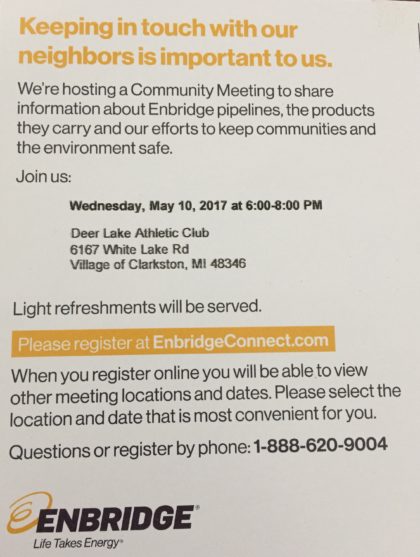 As many of you know, postcards from Enbridge have been arriving in the mail this week announcing a “Community Meeting.” In fact, Enbridge is (has been) holding a number of these meetings around the region this spring (details below). Understandably, this has people wondering and wary as to what Enbridge might be up to now. We’ve received queries from a number of people and also heard rumors of various sorts. So we just wanted to take a minute to set the record straight about these meetings.
You may recall that last summer, Enbridge finally reached a settlement with the Department of Justice for the Marshall spill. At that time, we expressed our deep disappointment in that settlement, which is shockingly favorable to Enbridge’s interest. In our view, it amounts to a reward, in fact, rather than a punishment.
At any rate, among the many directives in the Consent Decree outlining the details of the settlement (which you can read here) is a requirement that Enbridge perform “Community Outreach.” Here is what the decree says:
In addition to the above exercises, Enbridge shall conduct or hire a contractor to conduct Community Outreach sessions regarding the hazards of the different oils in the Lakehead System and the location of Enbridge pipelines in the community and how such pipelines are marked. Specifically, within one year of the Effective Date, and for each year thereafter until the Decree is terminated, Enbridge shall hold at least 15 Community Outreach Sessions in 15 different communities where the Lakehead System is located. Enbridge shall also provide information at the Community Outreach sessions regarding: (i) how the community should respond in the event of a spill, (ii) how the community can obtain information in the event of a spill from Enbridge and government agencies, and (iii) how the community can report spills to Enbridge, EPA, and the National Response Center. (116.e., p. 115)
So these meetings are nothing more than informational sessions to comply with the DoJ order. They are apt to be rather boring– though you can be sure that we’ll be attending to find out. If nothing else, it will be interesting to see whether Enbridge has anything to say about “the hazards of the different oils in the Lakehead System” or whether they’ll just try to tell us once again how much the products they transport enhance our lives.
Here are the remaining meetings (a couple of others have already been held), with dates, times, and locations. Registration appears to be required.
Stockbridge, MI
Tue, May 9, 2017
Community Outreach Session: 6:00 pm
Heritage Elementary School
222 Western Ave,
Stockbridge, MI 49285
Clarkston, MI
Wed, May 10, 2017
Community Outreach Session: 6:00 pm
Deer Lake Athletic Club
6167 White Lake Rd,
Village of Clarkston, MI 48346
Port Huron, MI
Thu, May 11, 2017
Community Outreach Session: 6:00 pm
McMorran Place
701 McMorran Blvd.
Port Huron , MI 48060
One final word: we know the blog has been dormant for a while as we’ve been attending to other things. But we’re planning a comeback– or more precisely, a reinvention. Please stay tuned for the relaunch coming very soon!
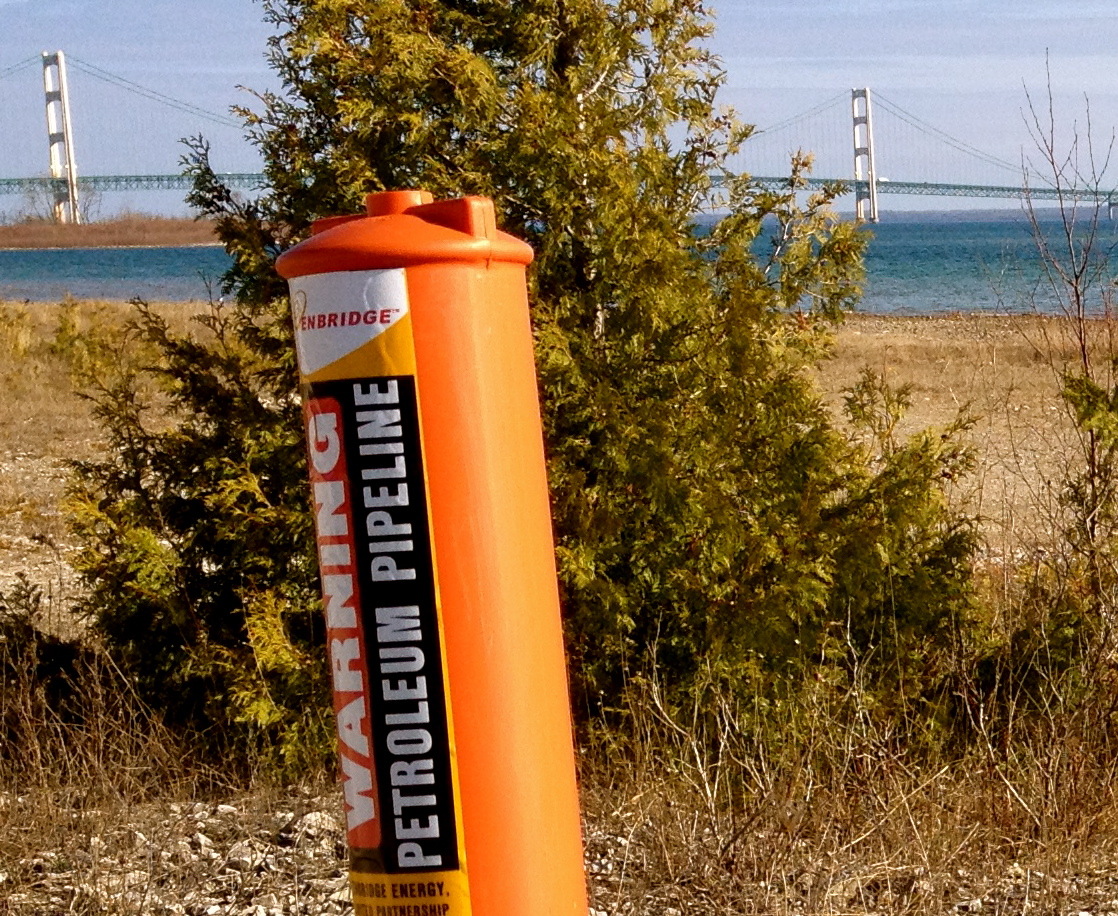
by Jeffrey Insko | Aug 1, 2016 |
As we reported last week, the Department of Justice and Enbridge have reached finally reached a settlement in the Marshall spill. For reasons we described in our post, we don’t think the settlement is at all satisfactory. And we’re not alone. In an excellent Smart Pig blog post, Rebecca Craven of the Pipeline Safety Trust also outlines some of the areas where the settlement appears to fall short. Our own view is that, in many ways, the settlement is quite advantageous to Enbridge.
However, there is one bit of good news in the settlement that we neglected to mention: it clearly prohibits Enbridge from ever re-using the original Line 6B. You might recall that this is something many of us in Michigan asked for repeatedly prior to construction of the new Line. But Enbridge always hedged. Now, that line will be decommissioned permanently, which is very good news indeed. Of course, even that injunction is less than ideal: it should have been part of the terms of approval of the new line and Enbridge should have been required to remove it, rather than leaving it in the ground.
Which brings us back to the consent decree. You see, as we mentioned in our last post, the proposed settlement contains a number of provisions relating to Enbridge’s Line 3 project in Minnesota, a project that might well induce in Michiganders a terrifying sense of déjà vu. Like Line 6B, Line 3 is old and deteriorating. The consent decree requires Enbridge to replace it and decommission the original Line 3. But this is in no way an onerous requirement for Enbridge and it certainly isn’t punishment. That’s because Enbridge already planned to “replace” the line. But as with Line 6B, they aren’t really “replacing” the line. Instead, they’re building a brand new one—an even bigger one—and they want to build it in a different location. Yes, you read that correctly: a larger diameter pipeline in a different location. To call that a replacement is an abuse of language. It’s also a very clever way of skirting the requirements of their presidential permit for that line—a replay of their Line 6B strategy.
But the Line 3 boondoggle is even worse than the Line 6B replacement. That’s because the consent decree does not require the permanent decommissioning of the original Line 3. Instead, it lays out a number of conditions that would allow Enbridge to continue to operate it. That’s deeply troubling. If that line is going to be decommissioned, we agree with our friends in Minnesota that it should be taken out of the ground, just as should have been done with Line 3 (in fact, you can support their efforts by signing this petition). But instead, the settlement leaves open the possibility of allowing Enbridge to operate both a new Line 3 in a new location and the old Line 3. As a result, Enbridge, cunningly, seems to have negotiated an agreement with the Department of Justice that essentially rewards them for the costliest inland oil spill in U.S. history.
But here’s the (potentially) good news: the settlement is not yet final. The public has 30 days to comment on it. We urge you to do so. In particular, we urge you to ask the DoJ to remove the Line 3 provisions altogether. After all, what do those things have to do with affairs in Michigan in the first place? You might also encourage DoJ to file criminal charges and to require Supplemental Environmental Projects that could benefit Michigan. Lastly, you might ask for some tougher requirements with regard to Line 5. Instead of giving them tacit permission to continue to operate those lines, Enbridge should have to generate a plan to shut down and remove those dangerous pipelines from beneath the Straits of Mackinac once and for all.
For more reasons you should oppose the Line 3 project and helpful links for commenting on the consent decree, visit this page from our friends at Honor the Earth.
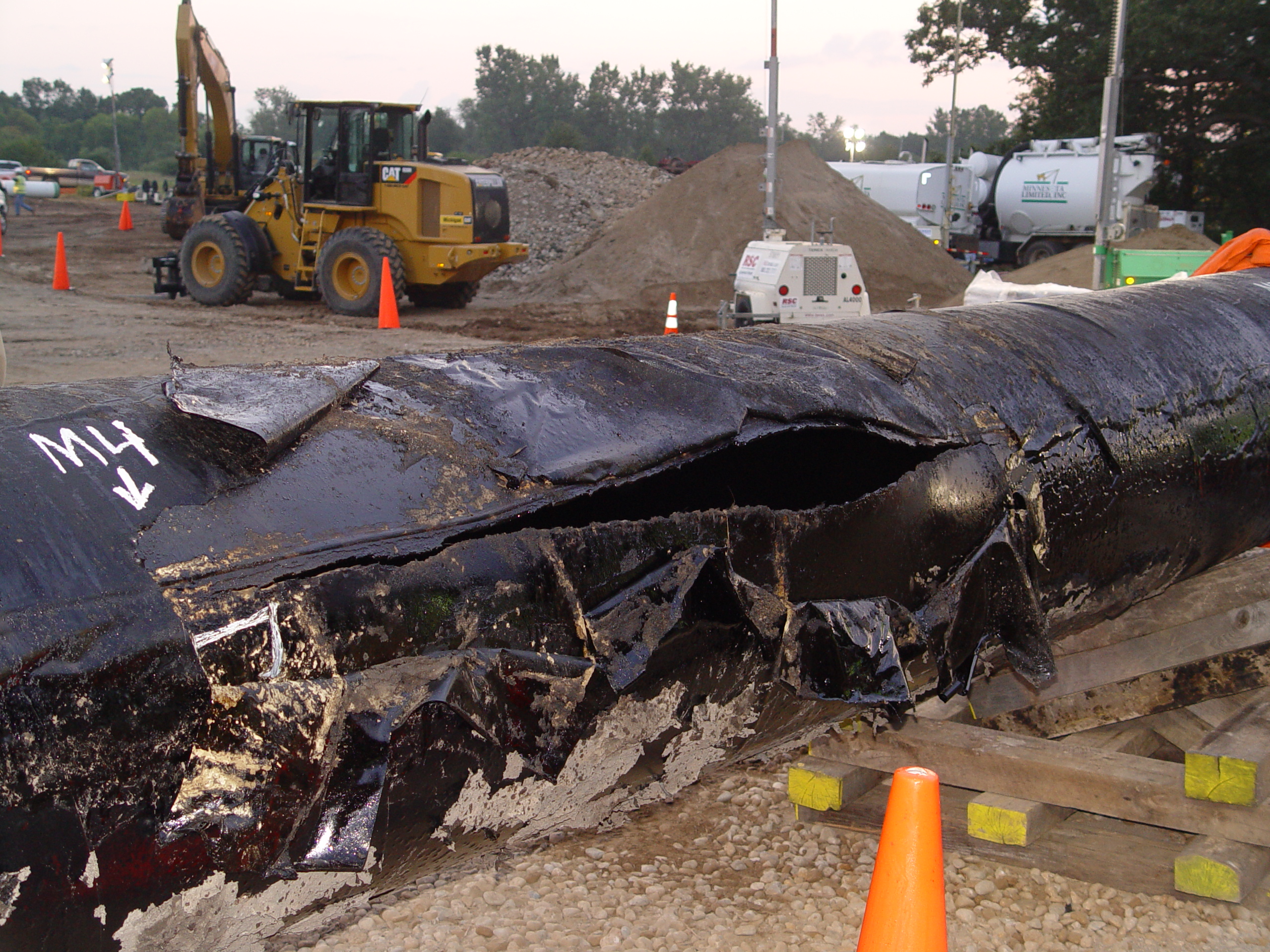
by Jeffrey Insko | Jul 25, 2016 |
We’re back from our period of dormancy to mark the sixth anniversary of the Marshall spill. (Yes, despite what Enbridge says, today is the anniversary!).
By now you have probably heard the news: last week the Department of Justice, at long last, has announced penalties against Enbridge for the devastating Marshall spill. Why it took six full years and why the penalties were a matter of negotiation, we will never understand. But setting that aside, we’ve got a few things to say about the substance of the so-called “settlement”:
First, you probably read that Enbridge has been “hit with a $177 million bill” or some such. Everybody seems to be seizing upon this $177 million figure, even those who have been most outspoken or dogged in documenting Enbridge’s misdeeds. But don’t believe it. Enbridge was not hit with a $177 million dollar bill. The DoJ levied a $61 million civil penalty— for violations of the Clean Water Act. They were also “hit” with another $1 million for another spill. And they are required to pay back another $5 million to the Oil Spill Liability Fund, which they drew from during the cleanup.
So why is everybody saying $177 million? Well, it’s because Enbridge and DoJ estimate that it’s going to cost Enbridge an additional $110 million to comply with a number of provisions in the settlement, many of them having to do with safety tests of their pipeline network and others having to do with repairs and other costs.
But it’s a real stretch to pretend that money is some sort of penalty. After all, most of what the DoJ is requiring of Enbridge— hydrotests to assess the conditions of their pipelines, for instance— is stuff you’d expect them to be doing anyway. It’s the normal cost of operating pipelines.
Even worse, probably the largest chunk of that $110 million has to do with the replacement of Line 3, an aging pipeline Enbridge operates which runs from Neche, North Dakota to Superior, Wisconsin, which the consent decree requires. Trouble is, replacing that line is something Enbridge is already planning to do. So it’s a capital investment they are making anyway (or so they have hoped), regardless of what DoJ said.
Which brings us to our second point: as a provision in this settlement, the replacement of Line 3 is not a penalty. It’s a gift. In fact, it’s great news for Enbridge.
We told you a bit about Line 3 a long time ago. That proposed “replacement” project is an even greater boondoggle than the “replacement” of Line 6b was. That’s because Enbridge’s proposed route for the new Line 3 doesn’t even follow the same route as the original Line 3. It’s not a “replacement,” it’s new infrastructure. Enbridge wants to put that line in the same corridor as the proposed Sandpiper pipeline— a route that, as our friends at the Friends of the Headwaters know very well, is totally bonkers, as it threatens some of the most environmentally sensitive areas in the state.
Even worse, the route for the newly proposed Line 3 is identical to the route of the Sandpiper pipeline, which, frankly put, is just plain crazy. Our friends at the Friends of the Headwaters have explained why repeatedly— and convincingly.
So here’s the problem with the DoJ provision: it may well be that Line 3, an aging pipeline, needs to be replaced (just as Line 6b did). But that fact does not mean that Enbridge ought to get to do whatever it wants, however it wants. But that’s going to be exactly what happens now. Enbridge will use that provision as a cudgel to beat any sort of questions or opposition to that project into submission. Any questions anybody asks Enbridge about the Line 3 replacement (such as its route) are going to be met with “we’re legally obligated to do this according to the Department of Justice, so just shut up.” Essentially, that provision gives Enbridge’s Line 3 plans federal blessing.
The third problem with the settlement is the failure of the DoJ to file any kind of criminal charges. Here it’s worth remembering some basic facts (all readily available in the NTSB report from 2011): Enbridge knew about defects in Line 6b for five years, but chose to do nothing about them. For years, Enbridge fostered a “culture of deviance” from its own safety protocols, which directly contributed to the Marshall disaster. As if that’s not bad enough, Enbridge’s control room operators knew there was a problem with Line 6b SEVENTEEN HOURS before shutting the pipeline down.
Letting Enbridge off the criminal hook is a slap in the face to the families whose lives were ruined by Enbridge’s documented negligence. Here we’ll just quote our friend Susan Connolly:
“Six years have passed with questions unanswered and concerns remain,” Susan Connolly, a local Michigan mother whose children suffered rashes as a result of the Kalamazoo spill, said in a statement. “The fines related to the Clean Water Act should not be in the form of a ‘settlement’ discussed and agreed to between the agencies and the at fault party. The maximum penalty should be ordered, criminal penalties assessed, and a Michigan Pipeline Trust created.”
Fourth, the feds missed an opportunity to make some lasting good out of this disaster. It is common in cases like this one, where businesses reach settlements with the feds for failures to comply with environmental laws, to create what are called Supplemental Environmental Projects (SEP), which are designed to help protect the environment. In a state as reliant on its marvelous natural resources, it is frankly shocking that the settlement included no SEPs of any kind. This is a travesty.
Finally, the settlement includes a whole bunch of provisions related to Line 5. Mostly, these have to do with conducting tests to assess the condition of the lines and repairing any defects or problems with the pipelines’ supports or coverage. On the face of it, these seem like good measures (although, again, these are things Enbridge ought to be doing already). But as with Line 3, these provisions simply give Enbridge federal cover. In this case, cover to continue operating those lines indefinitely, when nearly everybody— even those whose judgement is generally suspect— now recognizes that those lines ought to be shut down and decommissioned permanently. But now Enbridge gets to pretend like the federal government has given its approval for them to continue to operate Line 5. And, unfortunately, they’re right about that. They’ll now tell everybody that these federal mandates preempt any and all state and local authority.
As we (and plenty of others) have said repeatedly, the Marshall spill was not just an accident. It was not an honest mistake. It was the result of systemic problems and preventable actions. Those problems and actions destroyed properties, uprooted families, affected individuals’ health in ways we still don’t even understand. The DoJ’s consent decree does not even come close to redressing those actions; it certainly won’t do anything to deter Enbridge from continuing to operate as it always has. Quite the contrary: given the modesty of the penalty and the friendly Line 3 and Line 5 provisions, the consent decree, six years in the making, rewards Enbridge’s behavior.
